

| LCDF Pvt. Ltd.
Summary
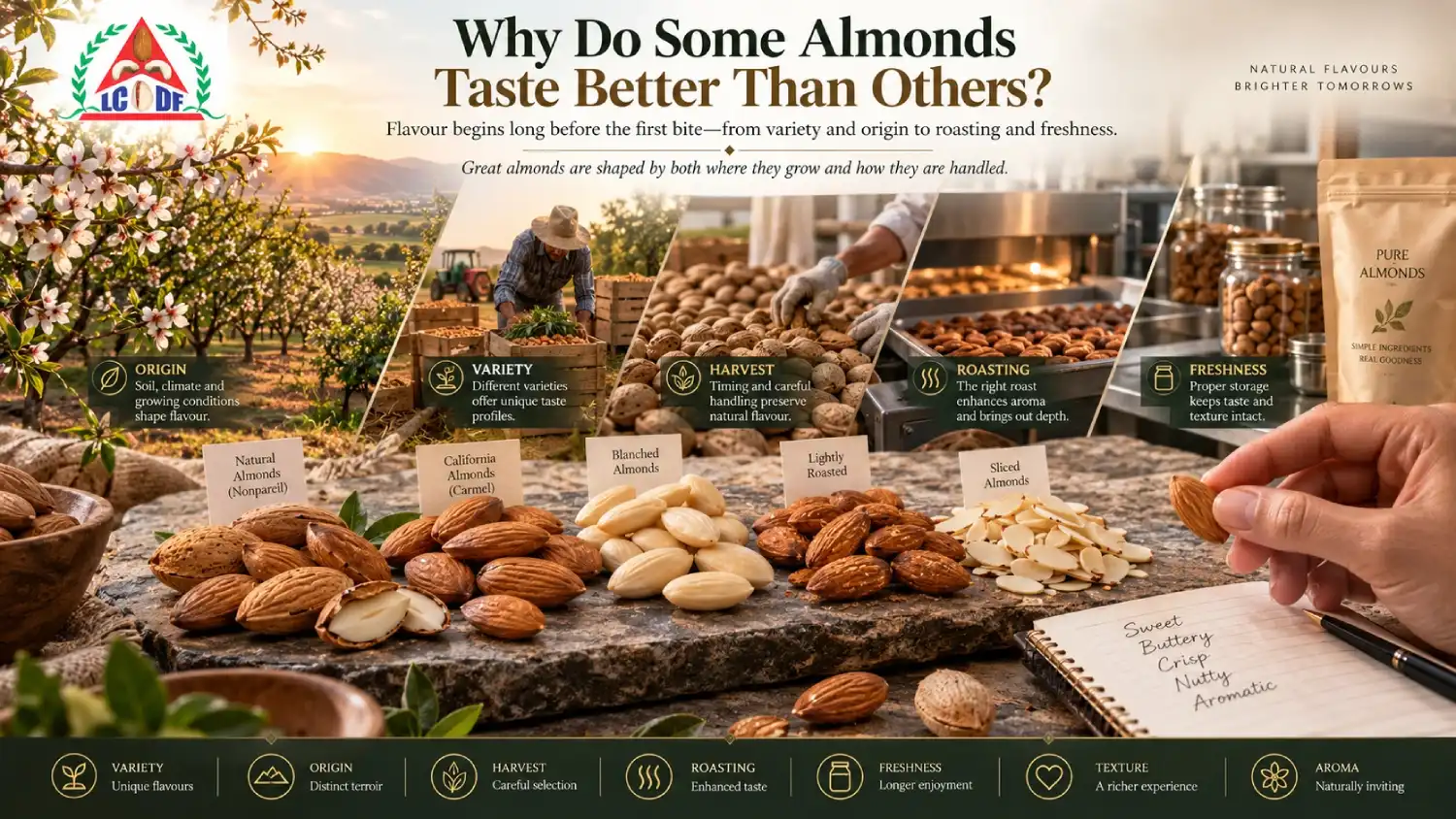
Ever noticed how two handfuls of almonds from two different packs can taste completely different - one rich and buttery, the other flat, chalky, or even a little bitter? That difference isn't random. It comes down to four things working quietly together: the variety of almond (Mamra, Gurbandi, California, and others each have their own natural sweetness and oil content), the soil and climate it grew in, how fresh it still is, and how carefully it was processed and stored along the way.
In this guide, we'll walk through exactly what shapes almond flavor - the science behind it, what to look for when buying, and why freshness matters just as much as variety. And because we've spent since 1964 learning these details firsthand at Lake City Dry Fruits, from HACCP and FSSAI-certified processing to careful batch testing, we're sharing this not just as information, but as something we genuinely stand behind, batch after batch.
Key takeaways
- Almond flavor isn't an accident - it's shaped by four things working together: variety, growing conditions, freshness, and how it's processed and stored.
- Not all almonds are genetically the same. Mamra, Gurbandi, Sanora, and California almonds each carry their own natural oil content, sweetness, and texture - which is why they taste noticeably different from one another.
- Bitterness can be natural, not just a sign of spoilage. Some almond varieties naturally contain higher levels of amygdalin, giving them a sharper edge compared to sweeter varieties.
- Where an almond grows matters more than most people realize. Soil quality, climate, and water availability shape flavor the same way terroir shapes wine - richer, more concentrated flavors often come from specific growing conditions.
- Harvest timing and drying method quietly influence sweetness and texture. Almonds picked and dried with care develop flavor differently than those rushed through mass processing.
- Freshness is the biggest hidden factor behind bad-tasting almonds. Oxidation breaks down natural oils over time, leading to that stale, chalky, or "off" taste - even in a good-quality almond.
- Roasting changes almonds at a chemical level. The Maillard reaction - the same process behind toasted bread and roasted coffee - is what gives roasted almonds their deep, nutty flavor compared to raw ones.
- How almonds are stored matters as much as how they're grown. Vacuum sealing, nitrogen flushing, and airtight packaging protect flavor long after the almond leaves the orchard.
- A few simple checks can help you choose better almonds every time - smell, texture, and knowing the variety go a long way in spotting freshness before you even taste it.
- Good taste and trust go hand in hand. At Lake City Dry Fruits, decades of HACCP, ISO, and FSSAI-certified sourcing and handling since 1964 exist for exactly this reason - because when you get the details right consistently, customers can taste it, every single time.
Introduction
If you've ever eaten two handfuls of almonds from two different packs and felt like you were tasting two completely different foods, you're not imagining things. One bite is sweet, buttery, almost creamy. The other is flat, chalky, maybe even a little bitter at the back of your tongue. Same nut, same shape, same "almonds" label on the packet - so why does the experience feel so different?
The truth is, an almond's flavor isn't one thing. It's the sum of several quiet decisions made long before it ever reaches your hand - the variety it came from, the soil and climate it grew in, how fresh it still is, and how it was processed and stored. Once you understand these four factors, you'll never look at a pack of almonds the same way again - and you'll know exactly what to look for the next time you're choosing one.
It Starts With the Variety - Not All Almonds Are Built the Same
Most people assume almonds are almonds. But the truth is, almond flavor starts with genetics - the same way Fuji and Granny Smith apples taste nothing alike, despite both technically being "apples."
Some of the most talked-about varieties include Mamra almonds, known for their dense texture and rich, slightly sweet taste; Gurbandi almonds, smaller in size but loved for their crunch and long-standing place in Indian kitchens; Sanora almonds, softer and milder in flavor; and California almonds, which dominate global supply thanks to large-scale, consistent farming.
Each of these carries its own natural oil content, sugar levels, and texture - and that's before anything else happens to the nut. It's something we notice constantly while sourcing - the same almond name can mean very different eating experiences depending on where it actually comes from.
Sweet Almonds vs. Bitter Almonds - What's Actually Different
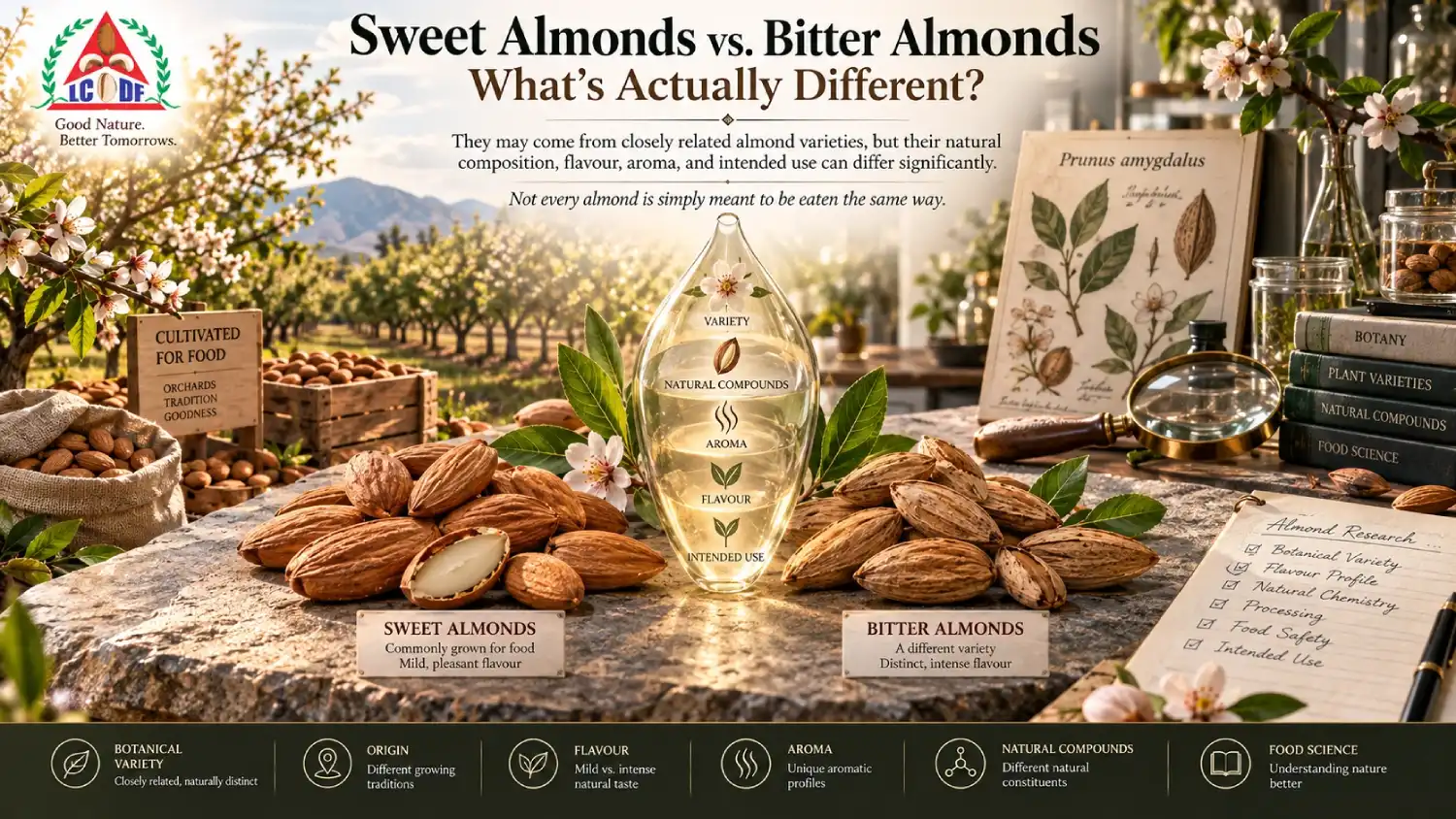
Here's something most people don't realize: almonds naturally fall into sweet and bitter categories, and the difference isn't just in your head - it's chemistry. Bitter almond varieties contain higher levels of a compound called amygdalin, which breaks down into compounds responsible for that sharp, bitter edge. Sweet almonds - the kind most of us snack on - naturally carry much lower amounts of this compound, along with subtle tannins and phenolic compounds that give them that mild, pleasant background flavor almonds are loved for.
Mamra vs. California vs. Gurbandi - A Real Taste Comparison
If you've ever wondered why Mamra almonds cost more, a lot of it comes down to oil content. Mamra almonds carry a notably higher oleic acid and overall fatty acid content, which is exactly why they taste richer and more "buttery" compared to the leaner, crisper bite of a California almond. Gurbandi almonds sit somewhere in between - smaller, denser, with a satisfying crunch that many households associate with genuinely premium almonds.
This is honestly one of the more fascinating parts of our work at Lake City Dry Fruits - after decades of handling almonds across these varieties, you start to recognize these differences almost instantly, just by texture and aroma alone. It's a big part of why we're careful about sourcing each variety properly, rather than treating "almonds" as one single product - because to us, and hopefully to you too, they never really were.
Where an Almond Grows Changes How It Tastes
Just like wine grapes are shaped by the land they're grown in, almonds are deeply influenced by their growing environment - something often called terroir. Soil quality, climate, altitude, and water availability all leave a quiet fingerprint on the final flavor, even if you'd never guess it just by looking at the nut.
Interestingly, almond trees that experience mild water stress during certain growth stages often produce nuts with more concentrated oils and sugars - nature's own way of "packing in" flavor when resources are limited. This is part of why almonds from certain growing regions, like the high-altitude belts associated with premium Mamra sourcing, tend to taste noticeably richer than mass-farmed varieties grown under different climate conditions. Even wild almonds, though rarely eaten directly, are a good reminder of just how much the natural environment shapes flavor right at its root.
This is actually one of the things we pay close attention to while sourcing at Lake City Dry Fruits - knowing which regions consistently produce richer, more flavorful batches isn't something you learn overnight. It comes from years of working closely with growers and understanding how much geography quietly decides an almond's fate before it ever reaches processing.
Harvest Timing and Drying Method Play a Bigger Role Than You'd Think
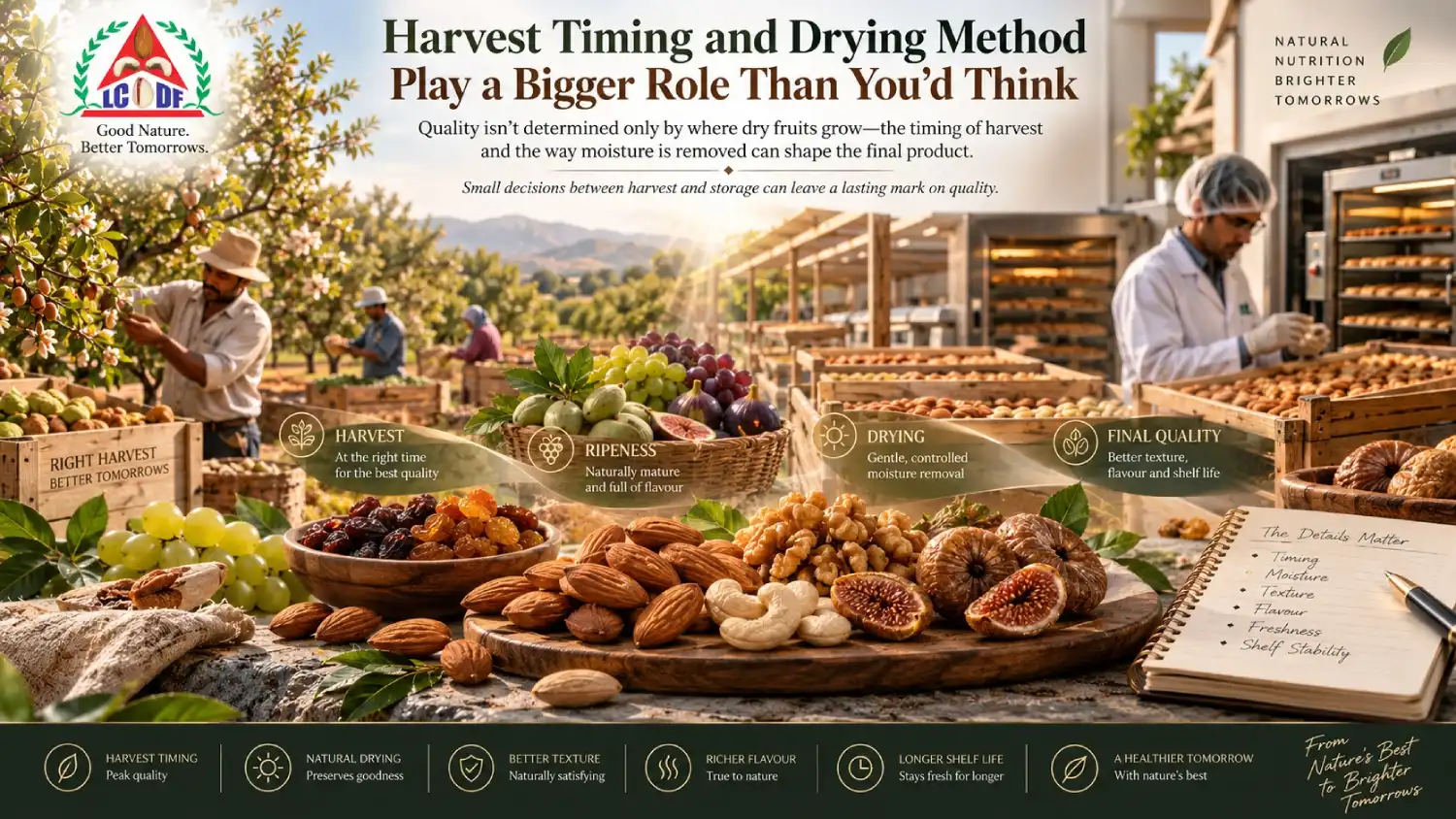
Two almonds from the exact same tree can taste noticeably different depending on when they were harvested and how they were dried. Harvest timing affects the natural sugar content locked inside the nut - pick too early, and the almond hasn't fully developed its sweetness yet; pick too late, and shifting moisture levels can throw off the texture entirely.
Drying matters just as much. Traditional sun-dried almonds develop flavor slowly and naturally, while mechanically dried batches, though faster and easier to scale, can sometimes flatten out those delicate flavor notes if the process isn't carefully controlled. It's a small, easy-to-miss detail - but it's often the invisible reason one batch of almonds tastes noticeably better than another, even when everything else about them looks identical.
It's also exactly why timing and drying methods are something we monitor closely at every stage - because we've seen firsthand how easily flavor can be lost through a rushed harvest or an uncontrolled drying process, and how much better the end result is when that patience is respected.
Freshness Is the Silent Flavor-Killer
Here's the part most articles about almond flavor skip entirely - and it might be the biggest reason your almonds taste "off" even if they're a good variety. Almonds are naturally high in fats, and fats are chemically unstable over time. When almonds are exposed to air, light, or warmth for too long, they go through a process called oxidation. This slowly breaks down the oils inside the almond, raising something called the peroxide value and producing compounds like hexanal - the exact chemical responsible for that stale, cardboard-like taste in old nuts.
This process, known as auto-oxidation, doesn't happen overnight. It creeps in gradually, which is why a lot of people don't even realize their almonds have gone stale - they just assume "this brand isn't that good," when really, it's a freshness problem, not a quality problem at the source.
How to Tell If Almonds Have Gone Stale
Trust your senses here. Fresh almonds have a clean, mildly sweet smell - almost nutty and neutral. Stale almonds often smell faintly like paint or old cardboard, even before you taste them. On the tongue, fresh almonds feel firm and slightly buttery, while stale ones taste flat, chalky, or leave an unpleasant aftertaste lingering at the back of your throat. If you've been noticing this in almonds you've bought recently, it's almost always a storage and freshness issue rather than the variety itself - something we go deeper into in our guide on almond storage and shelf life.
Roasting, Blanching, and Processing Change Flavor at a Chemical Level
The way an almond is processed after harvest adds an entirely new flavor dimension. When almonds are roasted, they undergo something called the Maillard reaction - the same chemical process responsible for the flavor of toasted bread, seared meat, and roasted coffee. Heat causes sugars and amino acids in the almond to react and create those deep, nutty, slightly caramelized notes that raw almonds simply don't have.
Raw almonds, by comparison, taste milder, cleaner, and closer to their natural oil-forward flavor. Blanched almonds - the ones with the skin removed - lose a bit of that earthy, slightly tannic edge that the skin carries, resulting in a softer, more delicate crunch. None of these methods make an almond "better" universally - they just create different flavor experiences suited to different uses, whether that's snacking, cooking, or garnishing.
How Handling and Storage Lock In (or Destroy) Flavor
Even the best variety, grown in the best soil, harvested at exactly the right time, can still lose its flavor if it isn't handled properly afterward. This is where storage conditions become just as important as everything that happened back in the orchard - and honestly, it's the stage most people never think to question.
Careful hand-sorting removes damaged or lower-quality nuts before they even reach packaging, which sounds simple but makes a real difference in consistency. From there, techniques like vacuum sealing and nitrogen flushing remove the oxygen that triggers rancidity in the first place, while airtight packaging protects almonds from moisture and light exposure during transport and storage. It's a quiet, unglamorous part of the process - but it's often the exact difference between an almond that tastes the same on day one and day ninety, and one that starts losing its character within weeks.
This is a step we take seriously at Lake City Dry Fruits, not because it's the most exciting part of the process, but because it's often the most overlooked - and overlooking it is exactly how good almonds end up tasting disappointing by the time they reach someone's kitchen. We'd rather get this unglamorous part right, every single time, than cut corners here and let all that earlier care go to waste.
What Quality Almonds Actually Look Like - Our Sourcing Standards
This is something we think about with almost every batch that comes through our doors. Since 1964, Lake City Dry Fruits has been sourcing and processing dry fruits with one simple belief - flavor and trust go hand in hand. You can't have one without the other.
That means every batch goes through careful quality grading and batch testing before it's packed, hygienic processing that meets HACCP, ISO, and FSSAI certification standards, and handling practices designed specifically to protect the nut's natural taste - not just its shelf appearance. We're not chasing the cheapest almond that looks fine on a shelf; we're chasing the one that still tastes fresh, sweet, and true to its variety when it reaches your kitchen, whether that's in Rajasthan or halfway across the 14+ states we currently serve. It's less about marketing language and more about a habit we've kept for over six decades - because customers can taste the difference, even if they can't always name why.
How to Choose Better-Tasting Almonds Every Time
You don't need to be a food scientist to pick better almonds - a few simple habits go a long way.
Smell before you buy or open a fresh pack - a clean, neutral, faintly sweet smell is a good sign, while anything sharp or "off" usually means the almonds have started to turn. Check the texture - good almonds feel firm, not soft or rubbery. Look at the source when you can - knowing whether you're buying Mamra, Gurbandi, or California almonds helps set the right taste expectations. And most importantly, buy from a source that takes storage seriously, since even a great almond can be ruined by poor handling after harvest. If you're buying dry fruits online in India, this is doubly important, since almonds often sit longer between packaging and delivery than they would at a local store.
Whether you're buying almonds for everyday snacking, for garnishing a dessert, or for making mithai during festival season, the same rule applies - freshness and variety matter more than the brand name on the packet.
Frequently Asked Questions
Why do almonds taste different from each other?
It comes down to a mix of variety, growing region, freshness, and how they were processed - each of these changes the flavor in a different way, even among almonds that look identical.
Why are Mamra almonds sweeter and more expensive than other almonds?
Mamra almonds naturally contain higher oil content and oleic acid, giving them a richer, buttery taste. They're also slower-growing and lower-yield, which adds to the cost.
Why do my almonds taste bitter sometimes?
This can happen either because of natural compounds like amygdalin present in certain varieties, or because the almonds have started oxidizing and developing an off-flavor from age.
How can I tell if almonds are fresh?
Check the smell first - fresh almonds smell clean and mild. If they smell stale, paint-like, or overly oily, and taste flat or chalky, they've likely lost freshness.
Does where an almond is grown really affect its taste?
Yes. Soil composition, climate, and water availability all influence the sugar and oil content of the almond, similar to how growing conditions affect the flavor of coffee or wine grapes.
Why do some almonds taste chalky?
A chalky texture is usually a sign of oxidation or moisture loss, both of which happen naturally over time, especially if the almonds haven't been stored in airtight, protected conditions.
Taste Is Never an Accident
Every almond that tastes truly good is the result of several things going right, quietly, in the background - the right variety, grown in the right conditions, harvested at the right time, and handled with real care all the way to your plate. None of it is luck. It's a chain of small decisions, and when even one link is skipped or rushed, you can taste it.
That's really the whole point of understanding almond flavor - once you know what to look for, you stop settling for "good enough" almonds and start noticing the difference a properly sourced, properly stored almond actually makes. At Lake City Dry Fruits, that difference has been the whole job since 1964 - and honestly, it still is.
About the Author
Lake City Dry Fruits has been in the business of sourcing, processing, and delivering quality dry fruits since 1964 - long enough to have learned, firsthand, exactly what separates an average almond from a genuinely good one. Over the decades, that experience has grown into a HACCP, ISO, and FSSAI-certified operation serving customers across 14+ states in India, but the core hasn't changed - a simple commitment to getting the details right, batch after batch.
This blog is written from that same place of experience - not as marketing copy, but as insight drawn from years of handling, testing, and understanding what actually makes dry fruits taste the way they should. Because when it comes to something as simple as an almond, trust isn't a claim you make. It's something you build, one honest batch at a time.
Conclusion
Every almond that tastes truly good is the result of several things going right, quietly, in the background - the right variety, grown in the right conditions, harvested at the right time, and handled with real care all the way to your plate. None of it is luck. It's a chain of small decisions, and when even one link is skipped or rushed, you can taste it.
That's really the whole point of understanding almond flavor - once you know what to look for, you stop settling for "good enough" almonds and start noticing the difference a properly sourced, properly stored almond actually makes. It's not about chasing the most expensive pack on the shelf; it's about knowing which small details actually matter, and choosing a source that takes them seriously.
At Lake City Dry Fruits, that's been the whole job since 1964 - long before "quality sourcing" became a marketing phrase. From HACCP, ISO, and FSSAI-certified processing to the care that goes into every batch we handle, our goal has never been to just sell almonds. It's to make sure the almonds you open taste the way they're supposed to - every single time. Because at the end of the day, taste doesn't lie, and neither do we.
For More Info Contact Us
Author

LCDF Pvt. Ltd.
Lake City Dry Fruits Pvt. Ltd. has been a pioneer in the dry fruits and spices industry for over 60+ years. From humble beginnings in Udaipur to a pan-India presence, we’ve built a reputation for sourcing the best global produce, ensuring uncompromising quality at every step.