

| LCDF Pvt. Ltd.
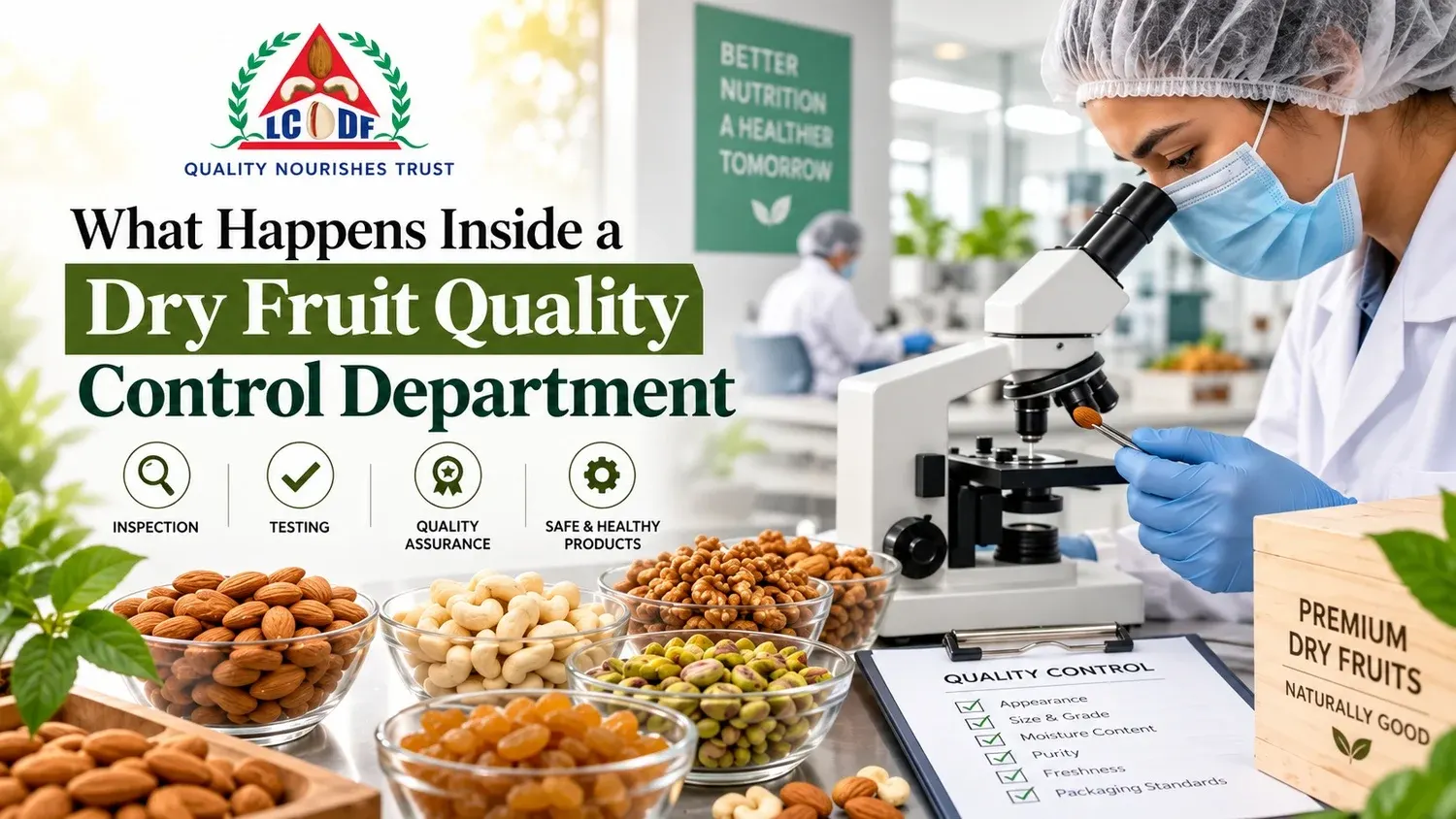
What Happens Inside a Dry Fruit Quality Control Department
Summary
Walk through any dry fruit business and the quality control department is easy to miss - no signage, no glamour, just people quietly doing the same careful checks, batch after batch, day after day. And yet it's the single most important room in the entire operation. Every test covered in this blog, from the first moisture content reading to the final sensory panel check, exists for one reason: to catch a problem before it ever gets anywhere near someone's kitchen.
None of this is visible work. Nobody sees the moisture analyzer readings, the aflatoxin screening results, or the peroxide value tests that quietly run behind the scenes. But this is exactly what separates dry fruits that merely look fresh from ones that have genuinely earned that freshness – through real testing, real documentation, and a quality control process that doesn't cut corners even when nobody's watching. That's not a marketing line. It's the actual difference between a supplier you can trust and one you're just hoping is fine.
Key Takeaways
- Every batch is checked from the moment it arrives at the door - not after it's already sitting on a shelf.
- Visual inspection catches what the eye can see, but real quality assurance goes much further, into moisture, safety, and taste testing that happens behind the scenes.
- Moisture content is one of the very first numbers tested, since even a small excess is enough to invite mould and cut shelf life short.
- Moisture content and water activity are not the same thing, and understanding the difference explains why two identical-looking batches can age very differently.
- Aflatoxin testing exists precisely because this contamination can't be seen, smelled, or tasted - which is why it's treated as one of the most serious checks in the entire process.
- Almonds, cashews, and walnuts are checked for early signs of oil oxidation, catching the start of rancidity long before it ever reaches the tongue.
- A trained sensory panel still plays a role no machine can fully replace, tasting and scoring every batch against a known standard.
- Packaging is not just presentation - moisture proof materials and proper storage protect everything the lab already worked hard to secure.
- India's monsoon humidity genuinely changes how testing works here, which is why a good quality control department adjusts with the seasons instead of treating every month the same.
- A batch that fails quality control is never quietly ignored. It's documented, explained, and handled with the same seriousness as one that passes - which is exactly what makes a testing process trustworthy.
Introduction
Nobody looks at a pack of almonds and thinks about everything that happened before it got there. It just sits on the shelf, looking fine, and that's usually enough. But "looking fine" and "actually being fine" are two very different things in the dry fruits business, and the gap between them is exactly what a quality control department exists to close.
Most people picture a dry fruit factory as sacks, sorting lines, and packing machines. What they don't picture is the room right next to all of that - the one with lab equipment, trained staff, and a daily list of decisions that decide whether a batch moves forward or gets pulled aside. This isn't a checklist bolted onto the process after the fact. It's a physical department with people making calls, hour by hour, batch by batch.
This blog walks you through that room the way it actually works - from the moment raw material shows up at the dock to the moment a finished pack is cleared for dispatch. Along the way, you'll see what a real quality control process looks like in practice, and why food quality control in a business like this is less about paperwork and more about a series of very deliberate, very human decisions.
How Incoming Dry Fruits Are Inspected Before They Enter the Facility
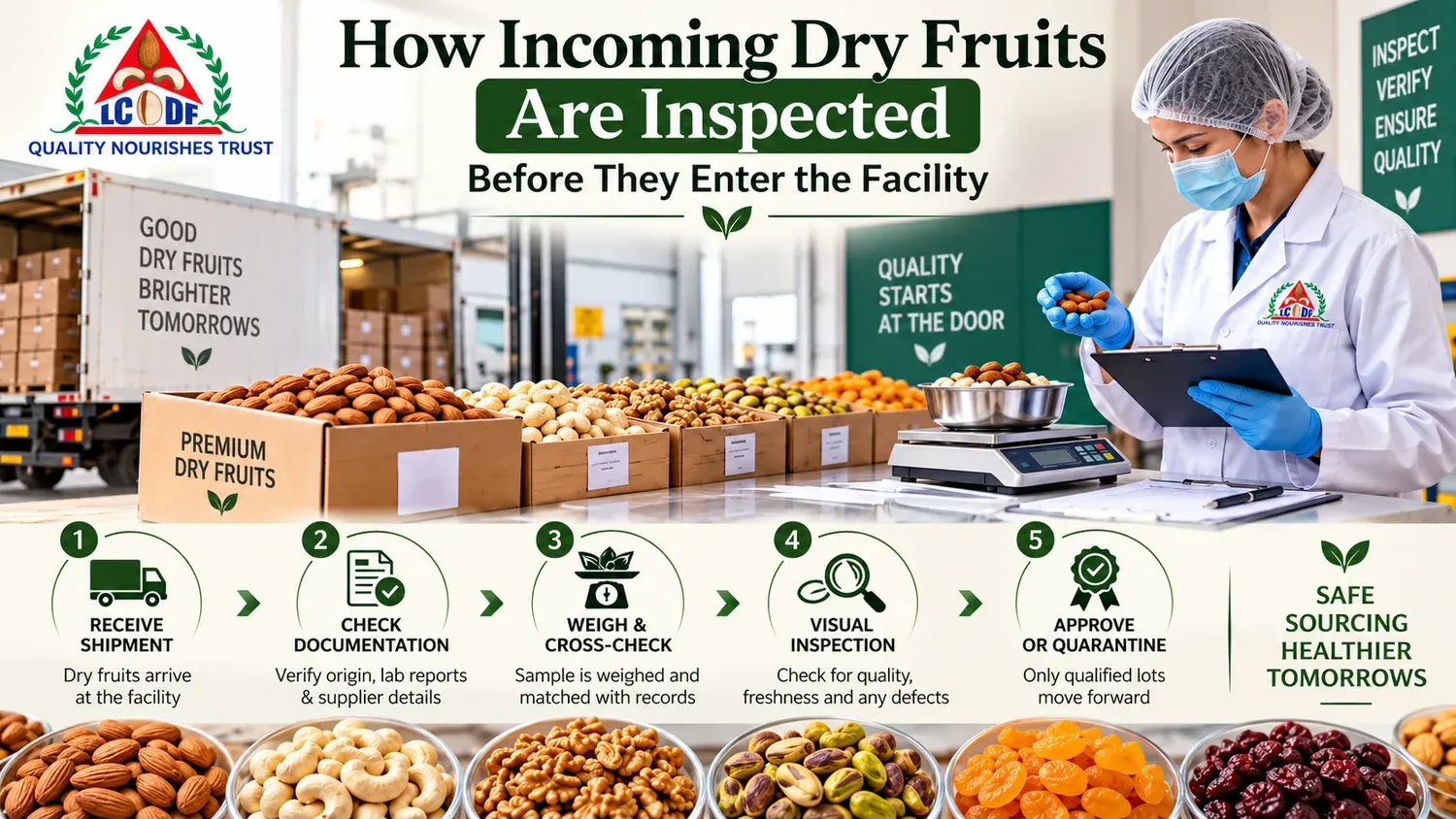
Before a single almond gets anywhere near the production floor, it has to clear the door - and that's not a figure of speech. Every incoming lot goes through raw material inspection the moment it arrives, checked against whatever documentation came with it: origin details, prior lab reports, supplier declarations. Someone from the team physically weighs a sample and checks it against what the paperwork claims. If the numbers don't line up, or if a lot shows up without proper documentation, it doesn't move an inch further. It sits in quarantine until someone can explain the gap.
This is really where good sourcing standards either pay off or fall apart. A lot of problems that show up weeks later - off flavours, inconsistent moisture, contamination - can usually be traced back to raw material that should never have been accepted at the incoming quality check stage in the first place. That's why origin verification and basic lot traceability matter so much here - not as a formality, but because they save the rest of the department from wasting time on something that was already compromised before it walked in the door. This is the literal starting point of farm to factory accountability, and skipping it quietly undermines everything that happens afterward.
Visual Inspection and Sorting: The First Line of Defense
Once a lot clears the door, it moves to sorting - and this is where machines and human eyes genuinely work side by side, each covering for what the other misses. Sorting machines are fast and consistent. They can flag size grading and colour sorting differences across thousands of pieces a minute without blinking. What they're not always great at is judgment - spotting an insect-damaged piece, a cracked shell, or a discoloured patch that technically falls "within tolerance" but shouldn't really pass.
That's where trained eyes come in. Manual sorting alongside machine sorting is really the first genuine line of defence against contamination, catching what's visible before anything moves further into the process. This stage also does double duty as early defect classification and foreign matter detection - a first pass that starts shaping a batch into the categories it will eventually be sold under, long before anyone talks about grading it formally.
Moisture Content Testing: Why It Is the First Number Every Batch Must Pass
After sorting, the batch heads to the lab, and the very first number it has to clear is moisture. This isn't arbitrary - moisture is what invites mould, and mould is what ruins dry fruits from the inside out, often before anyone can see it from the outside.
Moisture content testing usually starts with a moisture analyzer - specifically a halogen moisture analyzer, which gives a fast reading in a matter of minutes. But speed isn't the whole story. Periodically, the same sample gets rechecked using the slower, more traditional oven drying method, mainly to confirm the machine's readings are actually holding up. Every product has its own safe range here - raisins need to run drier than apricots, and apricots drier than figs. If a batch comes in wetter than its safe range, it gets flagged immediately, because that extra bit of moisture is exactly what shortens shelf life and accelerates spoilage risk and mould growth.
Moisture Content vs Water Activity: The Difference Almost Nobody Explains
Here's something most guides gloss over completely. Moisture content and water activity sound like the same thing. They're not, and the difference actually matters.
Moisture content tells you how much water is physically present. Water activity tells you how much of that water is actually free - available to feed mould and bacteria, rather than locked up and inert. A sponge and a sealed water bottle can hold the exact same amount of water, but the water in the sponge is exposed and available, while the water in the bottle can't support anything growing in it. Two dry fruit batches can show identical moisture readings on paper and still carry very different spoilage risk, depending on how much of that water is actually "active."
That's exactly why a proper quality control department never relies on moisture alone. Water activity testing - using a dedicated water activity meter - checks how much of the water inside the product could realistically support microbial contamination. Skip this step, and a batch can look completely fine on paper while still carrying a hidden risk that moisture testing alone would never catch. Testing both together, rather than either one in isolation, is what genuinely protects shelf life extension.
Aflatoxin Testing: The Most Critical Safety Check in the Department
If there's one test nobody in this department ever treats casually, it's this one. Aflatoxin testing exists because aflatoxins - produced by a mould called Aspergillus - are harmful even in tiny amounts, and they tend to show up after poor drying, delayed harvesting, or damp storage. Unfortunately, those are exactly the conditions that monsoon humidity makes far more common across India.
Every batch goes through aflatoxin screening before it gets anywhere near packaging, typically using HPLC testing or ELISA testing - both sensitive enough to catch fungal contamination at levels no human could ever detect unaided. FSSAI has set firm regulatory limits on how much aflatoxin is permitted in any food product, and there's no negotiating that number. A batch that crosses the line gets rejected outright, regardless of how good it looks, smells, or tastes.
This is often the one test that quietly decides an entire shipment's fate. A batch can sail through every visual check and still fail here - which is the whole point. It's the one food safety hazard that no amount of looking, smelling, or tasting could ever catch on its own. (For readers who want the regulatory detail, FSSAI publishes its aflatoxin limits and testing guidance directly on its official site.)
Peroxide Value Testing: Catching Rancidity Before You Can Taste It
Almonds, cashews, and walnuts all carry natural oils, and oils oxidise over time. That slow oxidation is what eventually produces the stale, bitter taste people associate with old dry fruits - and by the time you can actually taste it, the damage is already done.
That's where peroxide value testing comes in. It measures the earliest stages of oxidative rancidity happening inside the oil, well before it becomes noticeable on the tongue. A batch with a climbing peroxide value is a batch heading toward rancidity, even if it still looks and smells perfectly normal on the shelf. Catching this early - particularly in oil-rich nuts like almonds, cashews, and walnuts - means the department can act on a problem before it ever turns into a customer complaint.
Foreign Matter Screening and Metal Detection
Even after visual sorting, a few more layers of checking happen before anything gets close to a pack. Metal detectors scan for stray metal fragments that could have entered during harvesting or processing. Sieve screening filters out fine dust or soil particles. Some facilities still use a simple, low-tech trick - floating a sample in a saline solution, where heavier material like stones sinks while the actual dry fruit floats.
None of this is glamorous, but it's exactly the kind of hygiene standard that keeps cross contamination out of a product that's going straight into someone's mouth.
The Sensory Panel: Where Human Judgment Still Beats the Lab
Not everything can be measured with an instrument, and this is where the sensory panel earns its place. A small group of trained tasters runs sensory evaluation on aroma, flavour, and texture - scoring each batch against a known reference sample, not against personal taste for the day. A batch can pass every lab test and still get flagged here if the taste testing or texture evaluation feels even slightly off compared to the standard.
This step gets skipped in a surprising amount of quality control content online, which is odd, because it's arguably the most human part of the whole process. Machines can tell you what's safe. A trained panel is what tells you whether it actually tastes like premium dry fruits should.
Grading and Documentation: How a Batch Earns Its Certificate
Once a batch clears everything above, it moves into formal grading process territory and gets documented. This is where a certificate of analysis comes in - a record showing exactly what was tested, what the results were, and which lot the batch belongs to. That batch documentation is what makes a product traceable all the way back to its origin, which matters both for internal quality control standards and for customer trust.
Certifications like HACCP certification, ISO certification, and FSSAI certification aren't just logos sitting on a website footer. They represent the actual system this entire chain of testing runs on, day after day, whether or not anyone outside the facility is watching.
Packaging and Storage: Protecting Quality After the Lab Says Yes
Clearing the lab doesn't mean the job is finished. Packaging integrity plays a much bigger role in preserving freshness than most people assume. Moisture proof packaging keeps humidity out after the fact. Where it's used, nitrogen flushed packaging removes oxygen from the pack, slowing oxidation even further. And storage conditions matter just as much - dry fruits sitting in a hot, humid warehouse can lose quality even after passing every single test on day one.
Good packaging is really just an extension of everything the lab already worked to protect. Temperature controlled storage, proper humidity control, and basic warehouse hygiene aren't afterthoughts - skip them, and you undo hours of careful lab work in a matter of weeks.
Why Indian Quality Control Departments Work Differently
This deserves its own section, because most quality control content online is written with European or American conditions in mind, and India's reality is genuinely different. Indian monsoon humidity, combined with intense summer heat, pushes both moisture and aflatoxin risk noticeably higher than in drier climates. A quality control department operating in India has to test more frequently through these months and often holds itself to tighter internal moisture limits than the legal minimum - simply because the climate leaves far less margin for error.
FSSAI dry fruit regulations exist precisely because of these local conditions, and a department that actually understands Indian food safety standards builds its testing calendar around monsoon risk rather than treating every month of the year the same way. It's one of the clearer signs of an experienced Indian dry fruit industry operation versus one just going through the motions.
What Happens to a Batch That Fails Quality Control
This is something almost nobody talks about openly. When a batch fails, it doesn't just quietly disappear. Depending on the reason, a quality control officer either sends it back to the supplier with a clear explanation, downgrades it to a lower, non-food use where safety isn't a concern, or has it destroyed outright if the issue involves something like aflatoxin contamination.
Nothing about that decision is casual. It follows the same documentation trail as an approved batch, so there's always a record of what happened and why. A quality control team that can't explain its own rejections isn't really running a quality control department at all - it's just running a packing line with extra steps.
How to Use This Information When Buying Dry Fruits
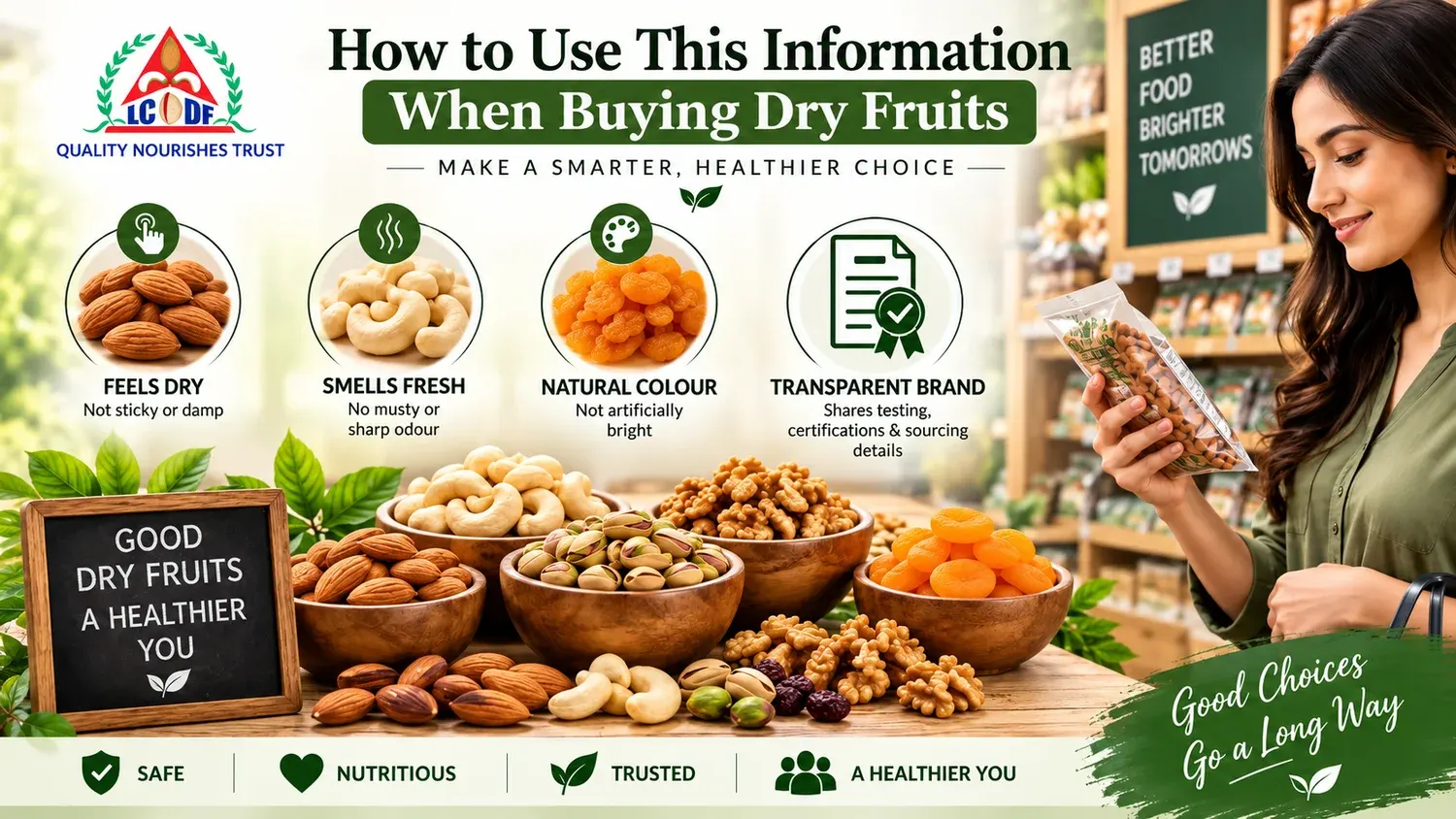
All of this lab work exists for one reason - to protect the person actually eating the final product. So here's the practical version, the buying guide part.
Good quality dry fruits should feel dry to the touch, never sticky or damp. They should smell fresh and neutral - never musty, sharp, or "off." Colour should look natural and even, not artificially bright. And if a brand is genuinely willing to talk openly about its testing process, certifications, and sourcing, that openness itself is usually one of the better freshness indicators you'll find, and a reasonable signal of a trusted supplier.
Knowing this doesn't just make you a more informed buyer - it also means the next time you pick up a pack of authentic dry fruits, you'll actually know what to look for instead of just hoping for the best.
About the Author
This blog comes from the team at Lake City Dry Fruits, a name that's been part of India's dry fruits and spices story for more than sixty years. It started small - a modest retail shop in Vallabhnagar, Rajasthan, back in 1964 - and has grown, quietly and steadily, into a name trusted across the industry, now being carried forward by its third generation of family ownership.
Nothing in this blog comes from research alone. It comes from people who spend their days around sourcing, testing, and packaging - not reading about the process, but living it, season after season, batch after batch. We've watched a monsoon test a warehouse the hard way. We've learned, firsthand, exactly why one moisture reading can never tell the full story on its own. That's not textbook knowledge - that's the kind you only get from doing this long enough to get it wrong once and never again.
For us, quality was never about collecting certifications to put on a website - even though we hold HACCP, ISO, and FSSAI certifications today, and stand behind every one of them. It's always come back to something much simpler, passed down across three generations: what reaches your home should be exactly as good as what left our facility. Nothing less. This blog is really just us opening that door a little wider, so you can see what that promise actually looks like in practice – not just hear us say it.
Conclusion
By now, if someone asks what actually happens inside a dry fruit quality control department, there's a real answer to give - not a guess. It's not one single check, but a full chain of them: raw material inspection at the door, visual inspection and sorting, moisture content testing, water activity testing, aflatoxin screening, peroxide value testing, foreign matter detection, and a sensory panel that still trusts trained human judgment over machines alone. Every step exists for the same reason - making sure what reaches the kitchen is genuinely safe, fresh, and worth trusting.
What makes this quality management system meaningful isn't just the testing itself, but the seriousness behind it. A proper quality control system doesn't look away when a batch fails - it documents the failure, explains it, and acts on it, the same way it certifies a batch that passes with a full certificate of analysis. And in a country where monsoon humidity and seasonal heat genuinely raise moisture and mould risk, this process has to work harder than it would elsewhere, adjusting through the year instead of staying static.
The next time a pack of dry fruits lands on a kitchen shelf, it's worth remembering there was a quiet department behind it - working long before anyone ever saw the label - making sure what's inside had already earned its place.
Author

LCDF Pvt. Ltd.
Lake City Dry Fruits Pvt. Ltd. has been a pioneer in the dry fruits and spices industry for over 60+ years. From humble beginnings in Udaipur to a pan-India presence, we’ve built a reputation for sourcing the best global produce, ensuring uncompromising quality at every step.