

| LCDF Pvt. Ltd.
Summary
In a market flooded with brands making nearly identical claims of "premium quality" and "100% pure," what actually sets a dry fruit brand apart comes down to specifics, not slogans. Real differentiation starts with transparent sourcing - naming exact origins like California almonds or Kashmiri walnuts - and extends to visible, verifiable certifications like FSSAI, rather than vague quality promises. Genuine quality control, from grading standards to moisture and safety testing, builds credibility that marketing language alone can't. Functional packaging that actually preserves freshness, honesty about net weight, and a firm no to unnecessary preservatives all add up to a brand customers can rely on rather than just believe. But perhaps the most underrated factor is consistency - the same taste and freshness with every reorder, not just a single great batch. Add a genuine brand story, a clear understanding of who you're really selling to, and easy availability wherever people shop, and you get a brand that earns loyalty instead of chasing it. In the end, standing out in this category isn't about shouting louder than the competition - it's about being specific, transparent, and dependable enough that customers stop looking elsewhere.
Key takeaways
- Generic claims don't build trust anymore - "premium quality" and "100% pure" mean nothing without specifics. Brands that name exact sourcing regions and back up claims with proof stand out immediately.
- Sourcing transparency is the real foundation - knowing and sharing exactly where your almonds, walnuts, or raisins come from signals control over your supply chain, not just a marketing line.
- Quality control needs to go beyond the label - grading standards, moisture content, and safety testing (like pesticide residue and aflatoxin checks) are what actually separate serious brands from the rest.
- Certifications only work if they're verifiable - simply saying "FSSAI certified" isn't enough; showing the actual license number turns a claim into something customers can check for themselves.
- Packaging is functional, not just visual - vacuum-sealed and resealable packaging directly affects freshness, and honesty about actual net weight builds more trust than most brands realize.
- Zero preservatives is a real differentiator - avoiding sulfur dioxide and artificial coloring speaks directly to health-conscious buyers who read ingredient lists before purchasing.
- Consistency matters more than a single great batch - repeat buyers stay loyal because every reorder tastes and feels the same, not because one pack impressed them once.
- Storytelling creates the emotional connection specs can't - a founder's journey and clear brand values turn a commodity product into something people feel connected to.
- Knowing your exact audience unlocks real opportunity - daily health buyers, festive gifters, and price-sensitive shoppers all want different things, and under-served niches like health-condition-specific combos are wide open.
- Being easy to reorder is just as important as being good - strong distribution across quick commerce, e-commerce, and subscription options removes the friction that stops repeat purchases.
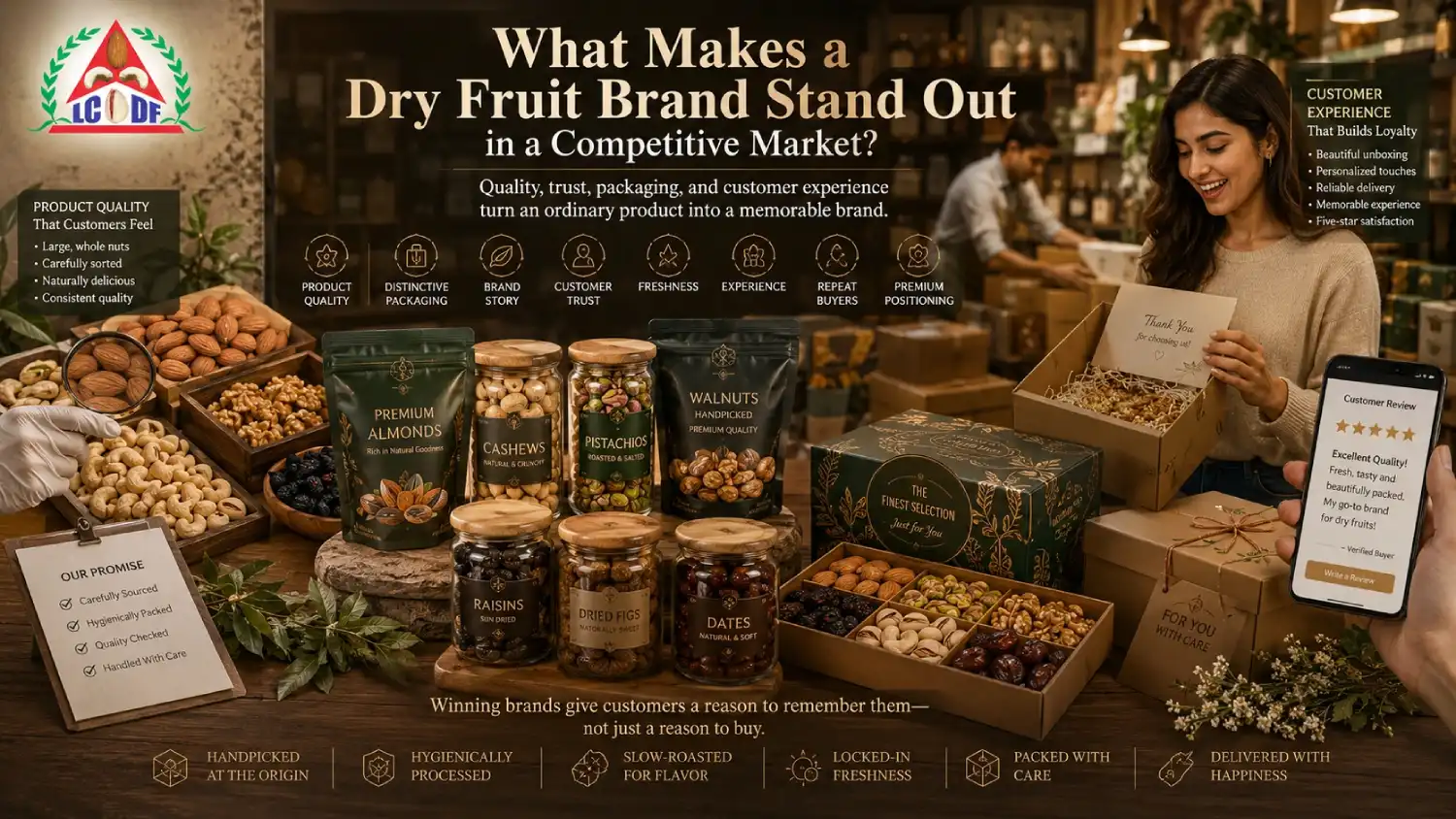
What Makes a Dry Fruit Brand Stand Out in a Competitive Market?
Walk into any grocery store or scroll through Amazon for two minutes and you'll see it - dozens of dry fruit brands, all claiming to be premium, all claiming to be pure, all promising the "best quality" almonds and cashews you'll ever taste. Nutraj, Happilo, Farmley, Tata Sampann, Vedaka, and hundreds of smaller D2C names are all fighting for the same shelf space and the same scroll-through attention on your phone screen.
So here's the real question - with everyone saying practically the same things, what actually makes one dry fruit brand different from the next? Why do some brands become the ones people reorder for years, while others get tried once and forgotten?
The honest answer is that it's rarely one big thing. It's a combination of smaller decisions - how the product is sourced, how it's packaged, what's written (and proven) on the label, and how consistently the brand delivers the same experience every single time someone opens a pack.
Let's break down what actually separates the brands that last from the ones that just blend into the noise.
The Dry Fruit Market Has Never Been This Competitive
A few years ago, dry fruits were mostly a festive or occasional purchase. Today, they've become part of daily nutrition for a huge number of Indian households - people are eating soaked almonds every morning, adding walnuts to their diet for heart health, and buying trail mixes as everyday snacks instead of chips.
That shift has pulled in a wave of new competition. Traditional wholesale-turned-retail names are now competing with venture-funded D2C brands, Amazon's own private label, and dozens of small quick-commerce-first startups. Everyone has access to more or less the same raw material sources, similar packaging vendors, and similar marketing playbooks. In a market this crowded, differentiation isn't a nice-to-have anymore - it's the only thing standing between a brand that grows and one that gets lost in a sea of near-identical listings.
Sourcing Transparency Is Where Trust Actually Begins
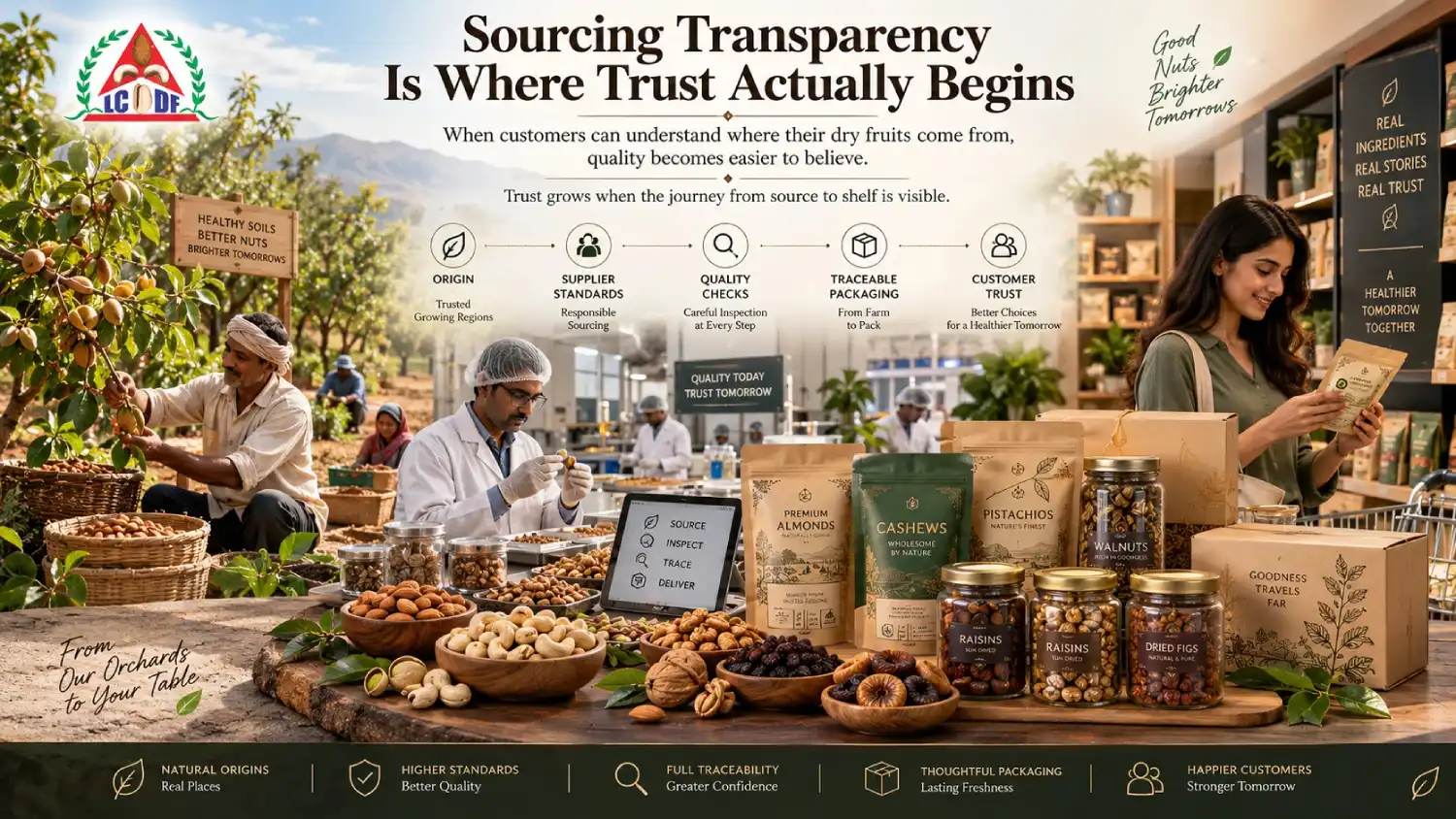
Almost every brand says "premium quality" on their packaging. Very few actually tell you where the product is coming from. The brands that do stand out are specific - they'll tell you the almonds are from California, the walnuts from Kashmir, the raisins and dried apricots from Afghanistan, the figs from Iran. That specificity matters, because it signals the brand actually knows and controls its supply chain rather than buying whatever is available cheapest at the time.
Farm-direct sourcing takes this a step further. When a brand sources directly from farms or growers instead of going through multiple layers of middlemen, it usually means better consistency, better pricing control, and less chance of the product being mixed with lower-grade stock along the way.
One thing almost no brand is doing yet, but that would genuinely set a brand apart, is real traceability - something as simple as a batch code or QR code on the pack that lets a customer see where that specific batch came from and when it was packed. It's a small addition, but it turns "trust us" into "verify it yourself," which is a much stronger position to be in.
Quality Control That Goes Beyond What's Written on the Pack
This is exactly where most brands go quiet - and it's also exactly where a brand has the chance to build real, lasting credibility, simply by choosing to get specific instead of vague. Quality in dry fruits isn't just a feeling or a gut impression, it's something that can actually be measured.
Almonds and cashews are graded by size and uniformity, moisture content has to be kept within a fairly tight range to prevent spoilage, and how the product is handled along the way determines whether those natural oils - the ones responsible for taste, aroma, and a good part of the nutritional value - are preserved or lost.
Then there are the checks most customers never even think to ask about. Serious brands test for things like pesticide residue and aflatoxin levels, because these aren't just quality issues, they're genuine health concerns when sourcing and storage aren't handled with care. Poor processing or careless, long-term storage doesn't just make the product taste a little off - it quietly strips away the very nutrition people are paying extra to get in the first place, often without them ever realizing it.
This is why a brand that's willing to actually explain its grading process and quality checks, instead of leaning on a generic "100% pure" label, comes across as far more trustworthy. It's a small shift in how a brand communicates, but it makes all the difference - because specifics are hard to fake, and vague claims never really were convincing in the first place.
Certifications That Actually Mean Something
FSSAI certification has become table stakes at this point - almost every legitimate brand has it. But there's a difference between simply claiming to be FSSAI certified and actually displaying the license number on your packaging and website. That one small detail makes a claim verifiable instead of just another marketing line.
Beyond FSSAI, certifications like organic or non-GMO can add another layer of trust, especially for health-conscious buyers who are willing to pay more for verified, chemical-free sourcing. Lab testing is another underused trust signal - if a brand is actually testing its products for purity and safety, saying so (and showing some form of proof) builds far more credibility than a generic "quality assured" badge.
Packaging That Does More Than Look Good
Packaging is often treated as a design decision, but for dry fruits, it's a functional one.
Vacuum-sealed packaging protects against air and moisture far better than a basic heat-sealed plastic pouch, which directly affects how long the product stays fresh. Resealable, ziplock-style packs matter even more, because most people don't finish a pack in one sitting - freshness after opening is just as important as freshness on day one.
There's also a growing shift toward sustainable and eco-friendly packaging, which appeals to a segment of buyers who care about environmental impact alongside product quality.
Here's something worth calling out that most brands quietly avoid talking about - the gap between the weight printed on a pack and what's actually inside it. It's a common practice across the industry to round up or use packaging that implies more content than there is. A brand that's transparent about actual net weight, and makes a point of it, immediately earns more trust than one that stays silent on the subject.
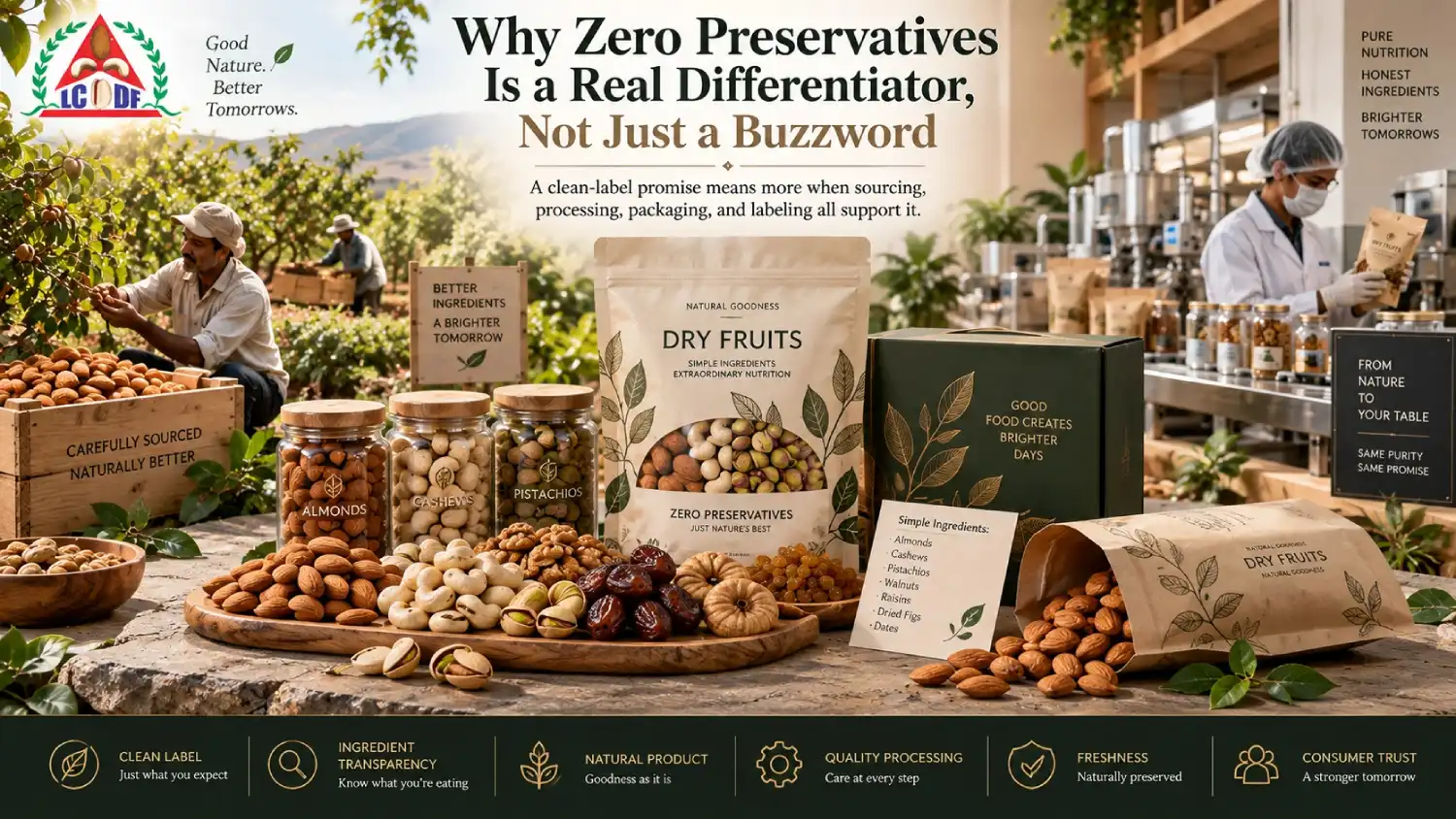
Why Zero Preservatives Is a Real Differentiator, Not Just a Buzzword
Here's something most people don't realize until they actually look into it - a lot of the dry fruits sitting on shelves today have been treated with sulfur dioxide or similar preservatives, mainly to stretch shelf life and keep colors looking bright and appealing. It's not illegal, and it's not even uncommon, but it's rarely something brands are upfront about. And it comes at a real cost, both to the "clean label" image brands are trying to sell, and to what health-conscious buyers actually want when they pick up a pack of almonds or apricots.
This is exactly where a brand can earn genuine trust instead of just claiming it. When a brand can honestly say zero preservatives, no artificial coloring - and actually prove it through proper sourcing, careful handling, and packaging that does the preservation work naturally instead of relying on chemicals - that's not a marketing angle anymore. That's a real difference customers can taste and feel. And it speaks directly to a growing group of buyers who've started reading ingredient lists before they buy anything, because they've learned the hard way that not everything labeled "natural" actually is.
Consistency Is the Most Underrated Trust Signal
This is the one factor that rarely gets discussed, but it might matter more than almost anything else. A single great pack of almonds doesn't build a loyal customer - repeat experience does. If someone buys a brand's cashews once and loves them, then reorders three months later and gets a noticeably different batch, that inconsistency quietly kills trust, even if they never say anything about it.
The brands that succeed long-term aren't necessarily the ones with the single best batch ever produced. They're the ones where every reorder feels the same - same crunch, same freshness, same taste. That kind of consistency is hard to fake and even harder to build without proper sourcing and storage discipline behind the scenes.
Brand Storytelling and Identity
Dry fruits are, at the end of the day, a fairly commoditized product. What separates a brand from a commodity supplier is often the story behind it. A founder's journey, the reason the business started, the values driving how the product is sourced and handled - these things create an emotional connection that specs and certifications alone can't.
Visual branding matters here too. How a brand presents itself on packaging, on its website, and across social media shapes the first impression long before someone tastes the product. A brand that looks put-together and tells a consistent story feels more trustworthy than one that looks like a generic reseller, even if the underlying product quality is similar.
Knowing Exactly Who You're Selling To
Not every buyer wants the same thing. Some people are buying dry fruits as a daily health habit and care most about freshness and nutrition. Others are buying for gifting during festivals and weddings, where presentation matters more than anything else. Price-sensitive buyers want consistent quality at the lowest possible cost, while a smaller segment is actively looking for organic, certified, premium options and is happy to pay for it.
There's also a largely untapped opportunity here - curating combos for specific health needs. Diabetic-friendly nut mixes, PCOS-friendly combinations, post-workout protein-rich packs. Almost no brand is doing this well right now, which makes it a genuine opportunity for differentiation rather than just another marketing angle.
Regional preferences matter too. Buying patterns and preferences can shift noticeably between North and South India, and demand spikes hard around Diwali, Rakhi, and wedding season, when gifting-focused packaging and presentation become just as important as the product itself.
Getting the Pricing and Positioning Right
No matter how competitively a brand prices its products, there will almost always be someone willing to sell it cheaper. That's simply the nature of this market. Trying to win purely on price is a race to the bottom that rarely ends well in this category, mainly because dry fruits don't leave much room to hide shortcuts. Cutting corners on sourcing or processing to save a little on cost shows up almost immediately - in the taste, in the freshness, in how the product holds up after a few weeks in the pantry.
The brands that actually do well over time tend to make a clear choice early on - premium, mid-range, or value - and then build everything else around that decision instead of trying to be everything to everyone. A brand that commits to being genuinely premium can justify its pricing through sourcing and quality that customers can actually feel. A brand that commits to being reliable and affordable can build trust through consistency instead of chasing the lowest possible price point. What doesn't work is trying to claim the top quality and the lowest price at the same time - customers see through that fairly quickly, and it ends up costing the brand more trust than it gains in sales.
Making the Product Easy to Buy, Again and Again
Even a great product doesn't sell itself if it's hard to reorder. Being present across quick commerce apps, major e-commerce platforms, and offering fast, reliable pan-India delivery removes friction at the exact moment someone decides to buy. Subscription models are also becoming more relevant here, especially for buyers who've made dry fruits part of their daily routine and would rather not think about reordering every few weeks.
Why So Many Dry Fruit Brands Fail to Stand Out
Most brands that struggle to grow aren't failing because their product is bad. They're failing because they're saying the exact same things as everyone else - "premium quality," "100% natural," "trusted by thousands" - without any proof or specificity behind those claims. When every brand's messaging sounds identical, price becomes the only remaining way for a customer to choose, and that's a losing game for anyone except the lowest-cost player.
The brands that actually break through are the ones willing to be specific instead of generic - naming their sourcing regions, showing their certification numbers, explaining their grading process, and being upfront about things like actual net weight instead of hiding behind vague marketing language.
A Quick Way to Check Where a Brand Actually Stands
If you're evaluating a dry fruit brand, whether you're running one or just deciding who to buy from, it helps to run through a short list. Is the sourcing specific and traceable? Are certifications actually displayed, not just claimed? Is the grading and quality process explained anywhere? Is the packaging functional, not just attractive? Is the net weight transparent? Does the brand have a real story behind it? Is quality consistent across repeat purchases? And is the product easy to find and reorder wherever the customer shops?
A brand that can genuinely say yes to most of these isn't relying on luck or advertising spend to grow - it's built on fundamentals that are much harder for competitors to copy.
Frequently Asked Questions
What makes a dry fruit brand trustworthy?
Mostly transparency - about sourcing, certification, and quality - backed up with consistency over repeated purchases, not just a strong first impression.
How is a premium dry fruit brand different from a regular one?
It usually comes down to sourcing quality, stricter grading, better packaging, and the absence of preservatives or shortcuts used to extend shelf life.
Why is FSSAI certification important for dry fruits?
It confirms the product meets basic food safety standards, and displaying the actual license number turns a vague claim into something a customer can verify.
What packaging is best for dry fruit freshness?
Vacuum-sealed packaging for initial freshness, combined with resealable or ziplock closures so quality holds up after the pack is opened.
How do I choose a genuine dry fruit brand in India?
Look past the marketing language and check for specific sourcing details, visible certifications, transparent net weight, and reviews from repeat buyers rather than one-time purchases.
In a market where almost every brand is saying the same things, the ones that actually stand out are the ones willing to be specific, transparent, and consistent - not the ones with the loudest claims. Trust in this category isn't announced, it's proven, one honest batch at a time.
About the Author
This blog is brought to you by the team at Lake City Dry Fruits (LCDF) - a name that's been part of the dry fruits trade long before "premium" and "clean-label" became buzzwords. Working closely with sourcing networks, wholesale supply chains, and quality standards day in and day out, the team at LCDF understands this industry from the inside, not just from a marketing desk.
That hands-on experience - knowing what good grading actually looks like, what proper storage requires, and what separates a genuinely trustworthy supplier from one that just sounds good on paper - is what shapes everything written here.
At LCDF, the belief has always been simple: customers and business partners deserve information they can actually rely on, not just polished claims. So whether it's a guide on choosing the right dry fruits supplier or a deep dive into what makes a brand trustworthy, every piece is written with the same standard LCDF applies to its own sourcing and quality - honest, well-researched, and built on real industry experience rather than guesswork.
If you'd like, I can tailor this further with a specific person's name and designation if you want it credited to an individual at LCDF rather than the team.
Conclusion
At the end of the day, dry fruits are one of those products where nothing stays hidden for long. A brand can talk about premium quality all it wants, but the moment someone opens a pack and tastes it, the truth comes out - and if that experience isn't consistent every single time, no amount of marketing will bring that customer back. That's really the heart of what makes a brand stand out in this space. It's not about having the loudest claims or the flashiest packaging, it's about the quieter things done right, again and again - sourcing that can actually be traced, certifications that can be verified, packaging that does its job, and a net weight that matches what's printed on the pack. None of these things are complicated or expensive to get right. What they require is honesty, and a willingness to be specific when everyone else is being vague. The brands that end up winning long-term aren't necessarily the biggest or the most heavily advertised - they're the ones customers stop questioning, because every reorder proves them right. That's not something a brand can claim its way into. It has to be earned, one honest batch at a time, and once it is, it becomes the kind of trust competitors simply can't buy their way past.
Author

LCDF Pvt. Ltd.
Lake City Dry Fruits Pvt. Ltd. has been a pioneer in the dry fruits and spices industry for over 60+ years. From humble beginnings in Udaipur to a pan-India presence, we’ve built a reputation for sourcing the best global produce, ensuring uncompromising quality at every step.