

| LCDF Pvt. Ltd.
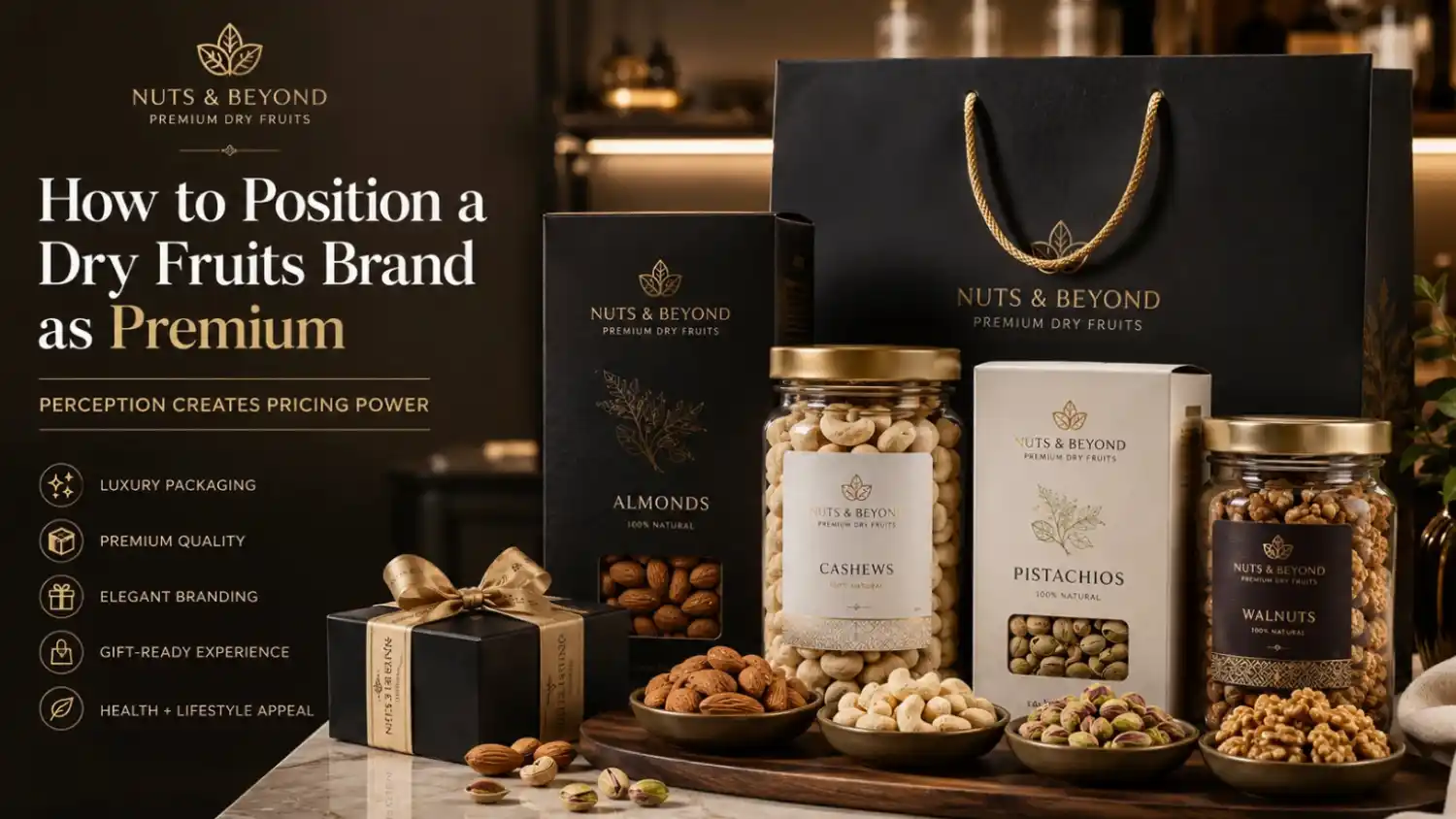
Summary
Building a premium dry fruits brand is no longer only about selling quality products. Today, buyers look for trust, transparency, clean packaging, strong branding, and a better customer experience. This guide explains how premium dry fruits brands position themselves through quality sourcing, packaging design, storytelling, pricing strategy, digital trust, and customer psychology. It highlights why premium buyers prefer clean-label products, healthy snacks, and transparent sourcing in 2026.
The content also explains the importance of visual presentation, user-generated content, customer reviews, and expert-backed positioning in increasing brand trust and profit margins. By aligning product quality, packaging, customer experience, and brand communication, businesses can stop competing only on price and build a trusted premium dry fruits brand with stronger customer loyalty and long-term profitability.
Key Takeaways
- Premium dry fruits brands compete on trust, not price
- Packaging strongly affects perceived product value
- Buyers prefer clean-label and healthy snack products
- Transparent sourcing improves customer trust
- Visual quality impacts premium positioning
- Customer reviews and UGC increase conversions
- Strong branding helps increase profit margins
- Premium buyers want proof, not marketing claims
- Digital trust is critical for online dry fruits brands
- Consistency in quality and experience builds loyalty
Introduction
The dry fruits market is crowded with brands fighting on price, but premium brands play a completely different game. They do not compete by being cheaper. They win by creating trust, quality perception, and a buying experience that customers are willing to pay more for.
That shift matters more than ever in 2026. The global dry fruits market continues to grow steadily, driven by rising health awareness, premium gifting demand, and the move toward clean-label snacking. Market studies also show that a large percentage of consumers now prefer healthier snack alternatives over traditional processed snacks, creating strong demand for premium dry fruit brands.
But here is the reality most businesses miss.
A higher price alone does not make a brand premium. As Philip Kotler explains, “The art of marketing is the art of brand building.” In the fruits business, being seen as high-end means making sure everything fits together. The quality of the product, how it's packaged, where it comes from, the story behind it, the price, and how customers feel when they buy it.
The brands that do well are not always the ones. They are the ones that make buyers feel good about what they're buying, like they are getting something healthy and worthwhile.
This guide will show you how to make your dry fruits brand seem end. It will give you tips, on branding, packaging, pricing, building trust using digital platforms, and understanding what makes customers tick. It will help you understand what buyers who are willing to pay more are actually looking for. Also, it will show you how to increase both trust and profit margins by positioning your brand in a way.
YouTube Video: Marketing Strategies For Nuts and Dried Fruit Store
What makes a dry fruit brand feel premium to buyers?
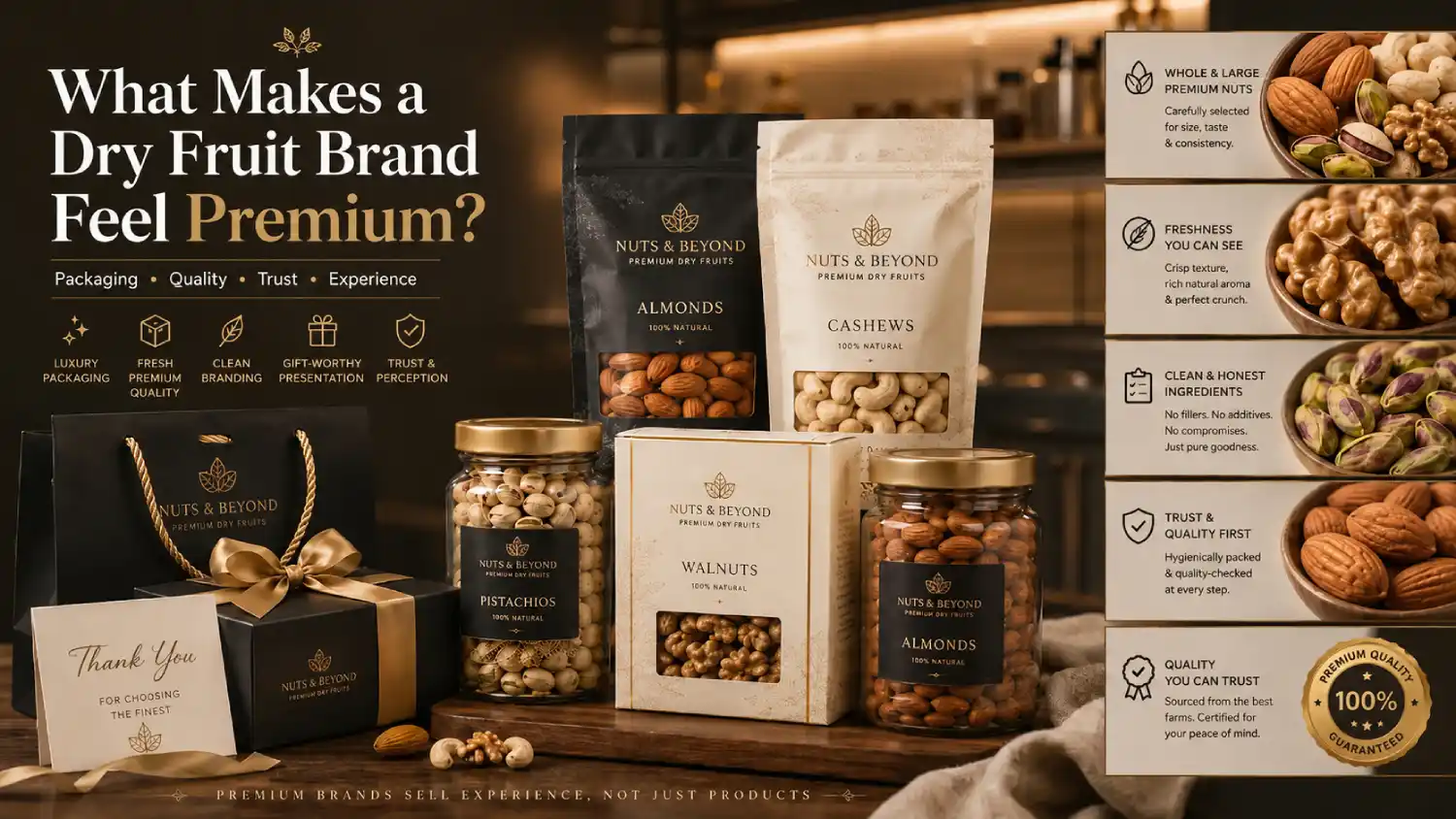
Buyers decide whether a dry fruit brand feels premium within seconds. Before they taste the product, they judge the packaging, label design, product appearance, brand presentation, and overall buying experience. If these elements look clean, trustworthy, and high quality, buyers naturally feel more comfortable paying a premium price.
This is becoming even more important in 2026 as consumer behavior shifts toward healthier and premium food choices. The US dry fruits market was valued at around $3.6 billion in 2025, with steady growth expected in the coming years. Market reports also show increasing demand for:
- Organic dry fruits
- No-added-sugar snacks
- Clean-label products
- Premium healthy snacks
- Traceable and responsibly sourced products
Another major trend is health-focused buying behavior. Recent market summaries indicate that nearly 68% of consumers now prefer dry fruits over regular processed snacks because they view them as healthier, more natural, and better for long-term wellness.
This shift is changing how premium dry fruit brands are built.
Today, buyers are not only purchasing almonds, cashews, raisins, pistachios, or dates. They are buying:
- Trust
- Health perception
- Product consistency
- Premium packaging
- Better lifestyle positioning
That is why premium branding matters so much in the dry fruits industry.
Quality signals that shoppers notice first
The first thing buyers notice is freshness and visual quality.
Premium dry fruits immediately look different:
- Whole almonds with low breakage
- Large and plump raisins
- Bright natural color
- Uniform sizing
- Clean texture without dust or excess oil
If products look dry, uneven, oily, broken, or poorly packed, buyers instantly associate them with lower quality. This weakens premium positioning, even before the product is tasted.
Visual consistency is one of the strongest quality signals in the premium snacks market.
Clean sourcing also plays a major role. Buyers pay closer attention to where products come from and how they are processed. Consistent taste, freshness, and appearance across batches increase trust and reduce price resistance.
This is why many successful premium dry fruits brands focus heavily on:
- Farm sourcing
- Quality control
- Small-batch processing
- Hygienic packaging
- Traceability systems
Premium buyers are willing to spend more when products feel safer, healthier, and more dependable.
Research on dried fruit brand perception also connects premium positioning with:
- Health-focused branding
- Transparent sourcing
- Clean packaging
- Consistent quality presentation
Why trust matters more than fancy words
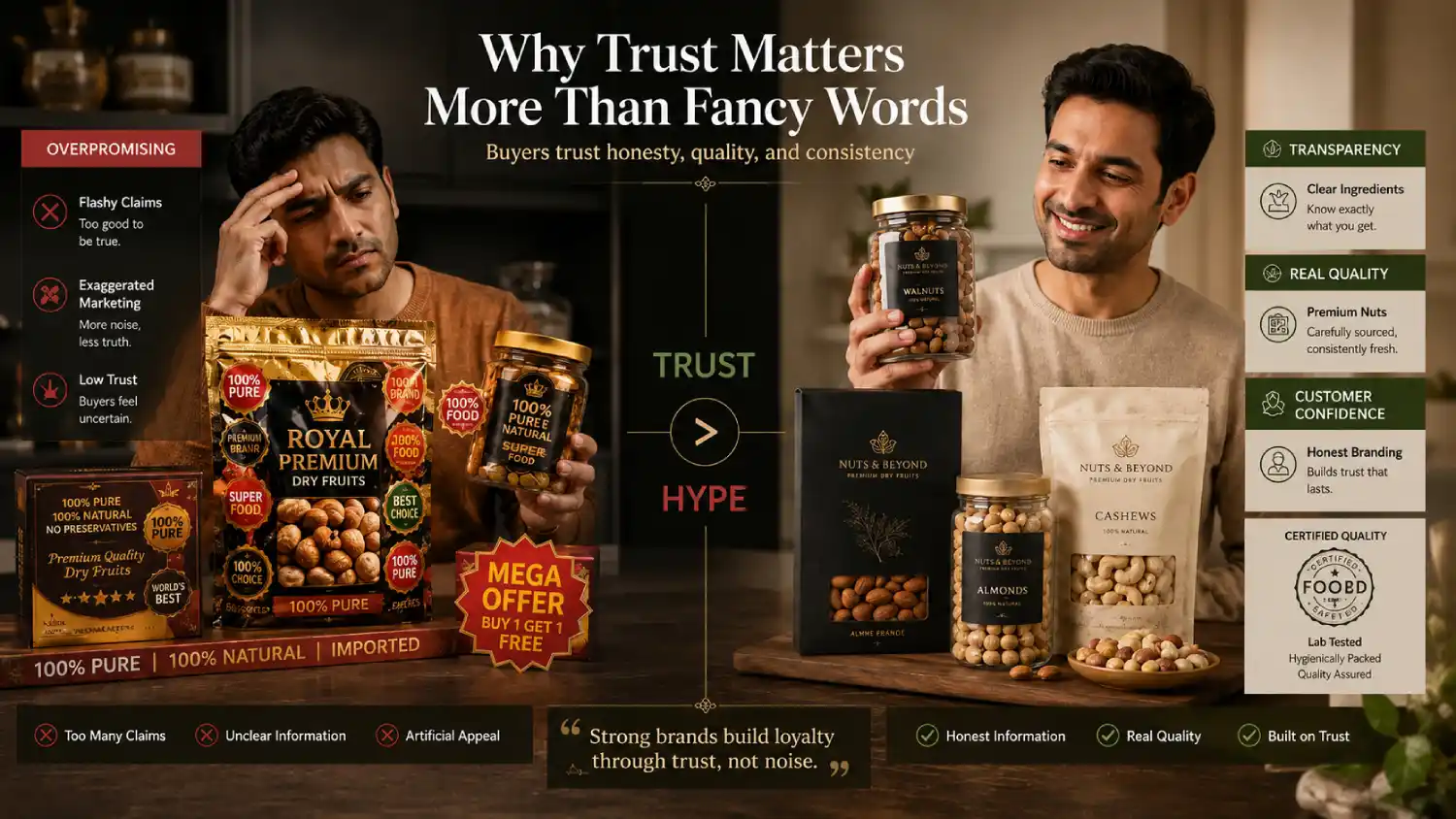
Premium buyers do not pay more because a product says “luxury” or “premium” on the label.
They pay more because they trust the product.
This is one of the biggest differences between an average dry fruit brand and a premium dry fruit brand.
Modern consumers are more informed than ever. They check:
- Ingredient quality
- Product origin
- Certifications
- Nutrition details
- Preservative information
- Customer reviews
- Packaging transparency
That is why proof matters more than marketing claims.
Strong trust signals include:
- USDA Organic certification
- Non-GMO labels
- Kosher certification
- Third-party lab testing
- Clear sourcing information
- Transparent ingredient lists
If you claim your products are “natural,” “healthy,” “clean,” or “premium,” your packaging and product pages must support those claims with real information.
Premium positioning is built through transparency, not exaggeration.
Packaging and presentation create perceived value
Packaging strongly affects how buyers judge product quality.
Premium dry fruits packaging usually feels:
- Clean
- Minimal
- Modern
- Easy to trust
In contrast, cluttered packaging with too many colors, badges, or claims often feels cheap.
Premium brands often use:
- Matte finishes
- Earthy tones
- Resealable pouches
- Glass jars
- Strong typography
- Minimal layouts
These design choices improve perceived value and support higher pricing.
Packaging also improves customer experience:
- Better freshness retention
- Easier storage
- Cleaner presentation
- More gifting appeal
This is why premium packaging directly impacts dry fruits brand positioning and profit margins.
Brand tone and customer experience also matter
Premium brands sound calm, confident, and trustworthy.
They avoid exaggerated marketing language and instead focus on:
- Clarity
- Simplicity
- Product quality
- Honest communication
For example:
- “Whole almonds with no added preservatives” sounds more premium than “best luxury healthy snack ever.”
Premium customers also expect:
- Consistent delivery
- Better customer support
- Reliable quality across orders
- Professional online presentation
This is why premium dry fruits branding is not only about products. It is about creating a complete premium experience.
Build a brand story that feels worth paying for
A strong story turns a common product into a brand people remember. Still, the story must stay simple. If it sounds made up, buyers will feel it.
Your story should connect to a real need. In dry fruits, that usually means better snacking, family nutrition, clean gifting, or a more thoughtful pantry choice.
Choose one clear brand angle
Pick one main angle and build around it. For example, your brand might focus on farm-sourced almonds, smart daily snacking, premium gift boxes, or specialty dried berries. If you try to say all of that at once, the brand starts to feel blurry.
That is why many strong brands stick to one lane. A health-first brand should talk about ingredients, freshness, and daily use. A gifting brand should highlight presentation, assortments, and finish.
Use language that sounds refined but easy to understand
Premium language is calm, not loud. Short phrases work better than hype. "Whole cashews, carefully packed" feels stronger than "best-in-class luxury snacking solution."
Keep your message clean. Use plain words such as "single-origin," "small-batch roasted," "no added sugar," or "resealable freshness pack" when they are true. Buyers trust clear words because they sound honest.
Make the packaging do the selling for you
Packaging makes an impression quickly. When you see a product in a store its packaging has to grab your attention without being too loud. Online, it needs to look good in a picture.
That's why high-end packaging is often simple, sleek and easy to understand. By 2026, market reports say that better packaging will also help products last longer. This is because of sealing and special packaging that keep products fresh. It adds value, not just looks.
Design choices that make products look high-end
Minimal layouts work well because they look controlled. Strong typography helps too. Rich greens, earthy browns, black, cream, and matte finishes often feel more upscale than glossy, crowded packs.
Clutter hurts trust. Too many badges, fonts, and bursts make a product look cheap. A restrained front panel, with one clear promise and a good product photo or window, feels more premium.
This premium dry fruits packaging guide shows why simple layouts and earthy tones often win.
Pack labels that answer buyer doubts fast
Your label should answer the buyer before they ask:
- What is in it
- Where it comes from
- Whether it has added sugar or preservatives
- How to store it after opening
The same rule applies to e-commerce images. Show the front, back, nutrition panel, close-up product view, and pack size. Many shoppers see the pack online first, so your images must carry the same premium feel as the product.
Price it like a premium product, not a commodity
Price tells buyers how to read the brand. If your pack looks premium but your price is bargain-basement, shoppers may doubt the quality. On the other hand, a high price with weak proof feels greedy.
Premium pricing works when the product, pack, and story match.
Use product tiers to serve different buyers
A good-better-best range helps. You can offer daily-use pouches, elevated family jars, and premium gift packs without weakening the brand.
This approach gives buyers an easy step up. It also protects margin because not every product has to compete on the same price point.
Support the price with real value
Give buyers a reason to pay more. That could be fresher stock turns, cleaner sourcing, no preservatives, small-batch roasting, freeze-dried fruit, or better portion sizes for work and travel.
2026 market reports from Research and Markets and Persistence Market Research point to the same premium triggers: trust, health, convenience, and sustainability. If you claim premium, show it in the product itself.
Sell the premium experience in the right places
A premium brand should appear where premium shoppers already browse. Placement changes perception.
Where premium dry fruits should be placed in stores
In physical retail, dry fruits perform better near health foods, fresh produce, premium snacks, and gift sections. That is not guesswork. In a Produce Business report on dried fruit merchandising, Eric Healy of Branch Out Foods pointed to produce-area placement and cross-merchandising as strong sales drivers.
Online, the same logic applies. Your marketplace listing should look like a premium shelf. Use clear images, tight copy, and strong review highlights.
Case study: how a new brand can stand out with better branding
The Ariga Foods branding case study offers a simple lesson. The brand used a clean name, a leaf-inspired logo, and polished packaging across raw and flavored ranges. That gave the products a healthier and more upscale image in a crowded category.
The takeaway is simple. You do not need noise. You need clarity.
Use digital trust, expert views, and UGC to prove value
Premium positioning gets really strong when others say things about your brand. Nowadays buyers don't just take your word for it. They want to see proof from people who have used your product, like reviews from experts or regular customers.
This is especially true for high-end food products and healthy snack brands. When buyers pay more, they expect a lot in return. Quality, for one.
Before purchasing premium dry fruits online, most buyers check:
- Product reviews
- Ratings and testimonials
- Packaging photos
- Ingredient transparency
- Social media presence
- Customer experience videos
- Brand credibility signals
This means your digital presence directly affects how premium your brand feels.
A strong premium dry fruits brand does not rely only on advertising. It builds trust through consistent validation across:
- Product pages
- Social media
- Customer reviews
- Influencer content
- User-generated content (UGC)
- Expert-backed positioning
What experts say premium buyers want in 2026
Market research firms like Renub Research and Persistence Market Research continue to highlight the same trends shaping premium food and dry fruits markets in 2026.
Premium buyers now prioritize:
- Clean labels
- Transparent sourcing
- Healthy ingredients
- Sustainable packaging
- Convenience
- Freshness assurance
- Authentic brand trust
Health remains the strongest buying trigger, but it is no longer enough by itself.
Today’s consumers also want:
- Proof of quality
- Consistency across batches
- Better packaging experience
- Ethical and clean sourcing
- Professional digital presentation
This is why premium dry fruits brands that combine quality with transparency perform better in both online and offline markets.
Experts also point out that younger buyers increasingly prefer brands that feel:
- Honest
- Modern
- Health-focused
- Lifestyle-oriented
This shift is pushing many premium dry fruits companies to invest more in:
- Storytelling
- Packaging design
- Content marketing
- Customer trust systems
How reviews, photos, and customer stories build credibility
User-generated content (UGC) is one of the most powerful trust-building tools for premium brands because it feels authentic.
Real customer experiences often influence buying decisions more than polished advertisements.
For example:
- A clean unboxing photo
- A pantry organization video
- A short Instagram reel showing fresh almonds
- A review mentioning “fresh taste, large size, no oily smell”
These small signals immediately increase buyer confidence.
When potential customers see real people enjoying the product, the premium price starts feeling justified.
This is especially important in the dry fruits market because buyers cannot physically taste or smell products online. They rely heavily on visual proof and customer feedback to judge quality.
That is why premium dry fruits brands should actively collect and display:
- Customer reviews
- Repeat buyer feedback
- Recipe posts
- Unboxing videos
- Product comparison photos
- Instagram story mentions
- Google reviews
- Marketplace ratings
These trust signals reduce hesitation and improve conversion rates.
Why visual proof matters for premium dry fruits brands
Dry fruits are highly visual products. Buyers naturally judge:
- Almond size
- Raisin texture
- Pistachio color
- Cashew quality
- Packaging cleanliness
Because of this, high-quality product photography becomes essential for premium positioning.
Strong visual presentation should include:
- Close-up product shots
- Natural lighting
- Texture visibility
- Packaging detail photos
- Nutrition label images
- Resealable packaging demonstration
Premium brands also benefit from:
- Lifestyle photography
- Healthy snacking visuals
- Corporate gifting presentation
- Clean kitchen and pantry imagery
These visuals help buyers emotionally connect with the product.
Social proof increases premium pricing power
When people repeatedly see positive reviews and customer satisfaction, they become less price-sensitive.
This is one of the biggest advantages of social proof.
For example:
- A product with 1,000 positive reviews can sell at a higher price than a similar product with no reviews
- Strong customer testimonials increase perceived quality
- Repeat customer comments improve trust and retention
This directly impacts:
- Conversion rates
- Repeat purchases
- Average order value
- Brand loyalty
- Profit margins
Premium buyers are not only buying dry fruits. They are buying reassurance that the product is worth paying more for.
Influencer and expert positioning also matters
Health-focused creators, nutrition experts, chefs, and lifestyle influencers can strengthen premium positioning when their content feels genuine.
Modern buyers trust:
- Diet recommendations
- Healthy snacking content
- Meal-prep creators
- Fitness influencers
- Wellness-focused product reviews
This helps position dry fruits as:
- Functional foods
- Daily wellness products
- Smart snacking choices
- Premium lifestyle products
When expert opinions and customer experiences align, the brand feels more trustworthy and premium.
About the Author
Lake City Dry Fruits is one of India’s trusted dry fruits and spices companies, with a legacy that began in 1964 in Rajasthan. Over the years, the company has grown from a small retail venture into a nationwide brand known for premium quality, reliable sourcing, and long-term business trust.
Lake City Dry Fruits has been around for more than 15 years. They work with people who grow things people who import things, people who process things, and big markets to get almonds, cashews, raisins, pistachios, dates, and spices to people all over India.
Lake City Dry Fruits helps people who sell things in stores, people who sell things to sellers, people who resell things, hotels and businesses that give gifts to their employees and customers. They do this by getting things from sources and having a good system to get things to people.
Lake City Dry Fruits focuses on:
- Premium quality sourcing from trusted global origins
- Hygienic processing and packaging standards
- Strong supplier and distribution network
- Transparent business practices and long-term relationships
- Consistent product quality across batches
The company also operates large-scale processing and packaging facilities and serves multiple states across India through B2B and B2C channels.
This content is based on practical industry experience, market research, sourcing insights, buyer psychology, and premium branding strategies observed in the dry fruits market. The goal is to help businesses build stronger brands, improve positioning, and create long-term value in the growing premium dry fruits industry.
FAQs
1. What makes a dry fruits brand look premium?
A premium dry fruits brand focuses on product quality, clean packaging, transparent sourcing, consistent freshness, and strong branding. Buyers also look for healthy ingredients, premium packaging, and trustworthy brand presentation.
2. How can I position my dry fruits brand as premium?
You can position a dry fruits brand as premium by improving packaging design, using high-quality products, highlighting clean sourcing, building customer trust, and creating a strong premium brand story.
3. Why is packaging important in premium dry fruits branding?
Premium dry fruits packaging creates first impressions and increases perceived value. Clean layouts, resealable pouches, glass jars, and modern design help products look more trustworthy and premium.
4. What do premium dry fruits buyers want in 2026?
Premium buyers in 2026 prefer:
- Clean-label products
- Organic dry fruits
- Sustainable packaging
- Transparent sourcing
- Healthy snack options
- Fresh and preservative-free products
5. How does branding increase dry fruits profit margin?
Strong branding allows businesses to charge higher prices by improving customer trust, product perception, and repeat purchases. Premium dry fruits brands usually achieve better profit margins than generic products.
6. Why do customer reviews matter for premium dry fruits brands?
Customer reviews, ratings, and user-generated content build digital trust. Real feedback about freshness, packaging, and taste makes buyers more confident about paying premium prices.
7. What are the best packaging styles for premium dry fruits?
Popular premium packaging options include:
- Matte finish pouches
- Glass jars
- Minimal label designs
- Eco-friendly packaging
- Resealable freshness packs
These improve shelf appeal and customer experience.
8. How important is sourcing in premium dry fruits business?
Sourcing is one of the biggest factors in premium dry fruits positioning. Consistent quality, traceable sourcing, and hygienic processing improve trust and product value.
9. Can a small dry fruits business become a premium brand?
Yes, small dry fruits businesses can build premium positioning through quality products, strong packaging, clear branding, customer trust, and consistent digital presentation.
10. How does digital trust affect premium dry fruits sales?
Digital trust directly impacts conversion and repeat purchases. Strong product photography, customer testimonials, expert-backed positioning, and social proof make premium dry fruits brands more credible and profitable.
Conclusion
Most dry fruit brands compete on price. Premium brands compete on perception, trust, and experience.
That is the real difference.
A premium dry fruits brand is not created by expensive packaging alone or by simply charging higher prices. It is built when every part of the business sends the same message—better quality, cleaner sourcing, stronger trust, and a more valuable customer experience.
As Seth Godin explains, “People do not buy goods and services. They buy relations, stories, and magic.” In the premium dry fruits market, buyers are not just purchasing almonds, cashews, raisins, or pistachios. They are buying confidence, health perception, gifting value, and brand trust.
This is exactly why premium positioning matters. When your product quality looks consistent, your packaging feels refined, your sourcing is transparent, and your digital presence builds trust, buyers stop comparing you with the cheapest seller in the market. Instead, they begin to see your brand as the smarter and safer choice.
This is how premium brands protect margins even in competitive markets.
The goal is not to sell to everyone. The goal is to build a brand that the right customers willingly pay more for because they believe the value is real.
In the end, premium positioning is about alignment:
- Better products
- Better presentation
- Better trust
- Better experience
When all these elements work together, your dry fruits brand becomes more than a product. It becomes a trusted premium brand with stronger customer loyalty, higher profit margins, and long-term business value.
For more information, contact us.
Author

LCDF Pvt. Ltd.
Lake City Dry Fruits Pvt. Ltd. has been a pioneer in the dry fruits and spices industry for over 60+ years. From humble beginnings in Udaipur to a pan-India presence, we’ve built a reputation for sourcing the best global produce, ensuring uncompromising quality at every step.