

| LCDF Pvt. Ltd.
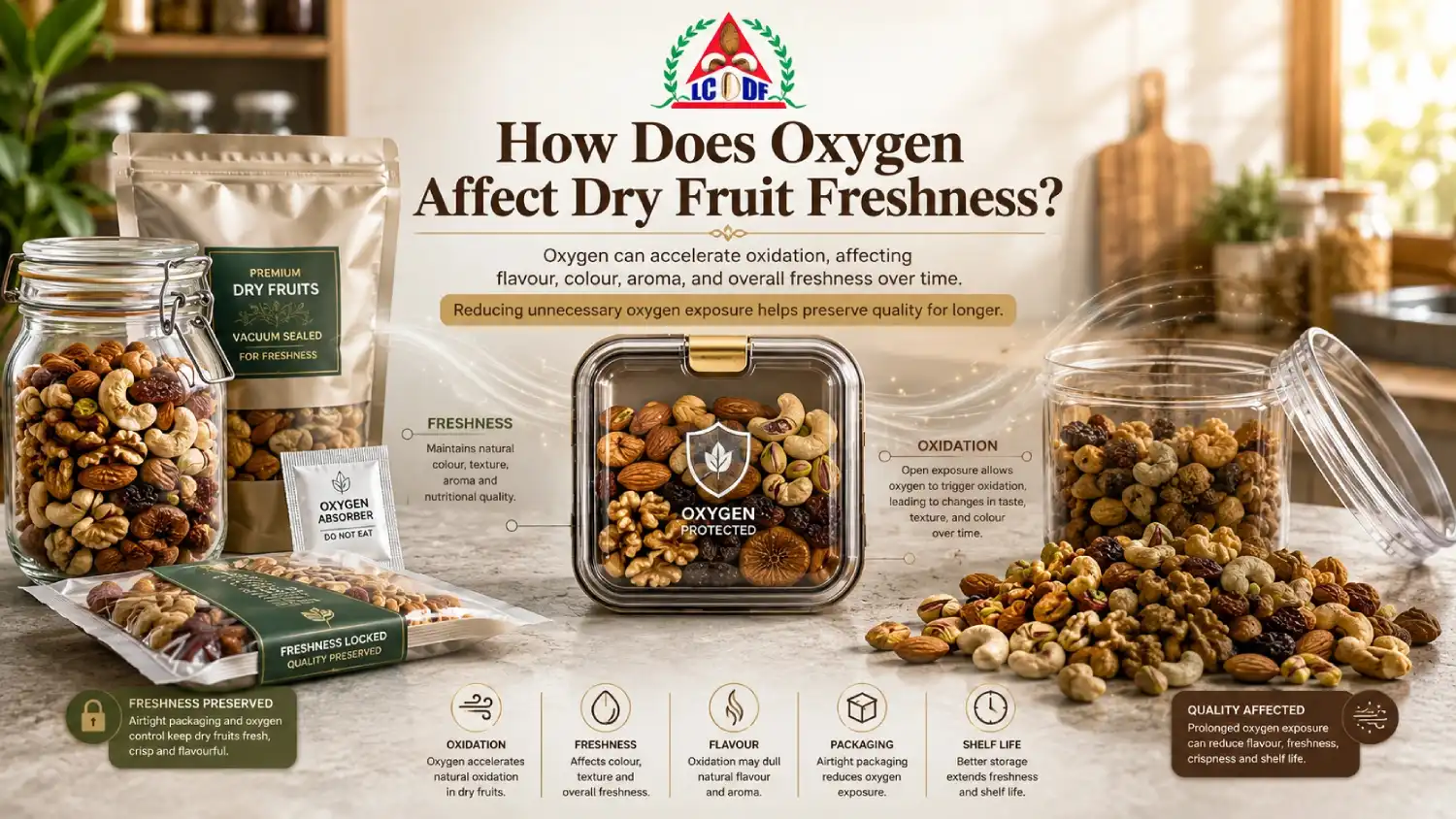
How Does Oxygen Affect Dry Fruit Freshness? The Science Behind Rancidity (And How to Stop It)
Summary
You'd think dry fruits are pretty low-maintenance - no moisture, no mould, nothing to really worry about. But there's a quieter threat at play: oxygen. The moment air reaches the natural oils inside nuts like walnuts, cashews, and almonds, a slow chemical process called oxidation begins - and it starts working long before you'd ever notice anything looks wrong. By the time a nut smells or tastes "off," it's already lost a good chunk of what made it worth eating.
This guide walks through exactly what that process looks like - the actual chemistry behind rancidity, why some nuts hold up far longer than others, how to catch the early warning signs using nothing but your own senses, and which storage methods genuinely make a difference versus which ones just sound good on paper. It's not textbook theory for us - it's the same thinking we apply every day at Lake City Dry Fruits, because we've learned that freshness isn't something you can judge from how a pack looks on a shelf. It's decided by everything that happens before it ever gets there.
Key Takeaways
- Dry doesn't mean safe. Dry fruits and nuts are packed with natural oils, and it's those oils - not moisture - that make them vulnerable to spoilage.
- Oxygen is the real culprit. The moment air touches those oils, oxidation begins - and it doesn't need heat or sunlight to get started. Oxygen alone is enough.
- Rancidity builds slowly, not suddenly. Scientists track this using peroxide value (PV) - once it crosses around 10 meq/kg, most people can taste and smell the difference clearly.
- Some nuts are more fragile than others. Walnuts oxidise fastest thanks to their high polyunsaturated fat content, while almonds and dates hold up longer because of their fat profile.
- Your senses are a reliable freshness test. Smell, colour, texture, and taste will almost always tell you the truth before any printed date does.
- Oxidation quietly steals nutrition, not just flavour. Vitamin C, B vitamins, and protective antioxidants break down as oxidation progresses - so stale nuts have lost more than just their crunch.
- "Airtight" doesn't always mean oxygen-free. Even sealed packs can carry trace residual oxygen, which is why oxygen absorbers and proper barrier packaging genuinely matter.
- Good packaging is doing real chemistry, not just marketing. Nitrogen flushing, vacuum sealing, and oxygen barrier layers all work to physically limit how much air reaches the nuts.
- Heat, humidity, and light speed everything up. During Indian summers and monsoons especially, refrigerating high-oil nuts like walnuts and pistachios makes a real difference.
- Best before isn't a safety deadline - it's a freshness guide. Trust your senses alongside the label, and always buy from FSSAI-certified sources like Lake City Dry Fruits for an added layer of confidence.
Introduction
Ever opened a pack of almonds that's been sitting in your pantry for a few months, popped one in your mouth, and thought... something's not right? A little bitter, a little sharp, like the almond is pushing back against your tongue instead of just being an almond? That's not a bad batch. That's not your imagination playing tricks on you either. That's oxidation, quietly doing its thing from the moment your dry fruits met the open air.
Here's a myth we hear a lot at Lake City Dry Fruits: people assume dry fruits can't really "go bad" because, well, they're dry. No moisture, no mould, no problem - right? Not quite. Dry fruits and nuts are loaded with natural oils, and oils have exactly one weakness: oxygen. The two react, and that reaction is what slowly robs your cashews, walnuts, and almonds of their crunch, their flavour, and eventually their goodness.
So let's actually dig into what's happening - why some nuts turn faster than others, and what genuinely helps (not just the usual "store in a cool dry place" advice you've read a hundred times).
What Actually Happens When Oxygen Meets Dry Fruit Oils
Picture a sliced apple browning on the counter, or a nail left out in the rain slowly turning to rust. Both of those are oxidation at work. Dry fruits go through something pretty similar - it's just quieter and a lot slower to notice.
Nuts and dried fruits are rich in unsaturated fats, the very oils that make them so good for you in the first place. The second those oils touch oxygen in the air, a chemical reaction kicks off. Oxygen molecules latch onto the fat molecules and form unstable little troublemakers called free radicals. Those free radicals then break down further into smaller compounds - and these are the ones responsible for that sharp, bitter, almost paint-like smell you get from stale nuts.
This whole process has a name: auto-oxidation. And here's the bit that catches most people off guard - it doesn't need heat or sunlight to get started. Oxygen alone is enough to set it off. Heat and light just step on the gas once the reaction is already underway.
The Science of Rancidity: Peroxide Value, Hexanal, and What They Actually Mean

This is the part most dry fruit articles skip because it sounds a bit technical - but honestly, it's the clearest way to actually understand what "freshness" means in numbers.
When fats oxidise, they don't turn rancid overnight. It happens in stages, and food scientists track this using something called peroxide value (PV). In the early days of oxidation, unstable compounds called peroxides start forming inside the oil. As things progress, those peroxides break down further into secondary compounds - one of the big ones being hexanal, which is basically the chemical signature of that stale, cardboard-y smell in old nuts.
To give you actual numbers: fresh almonds usually sit at a peroxide value as low as 0.17 meq O2/kg. Leave them stored badly for a year, and that number can shoot past 9 meq O2/kg. Once it crosses roughly 10 meq/kg, most people can taste and smell the difference without even trying - food scientists consider that the point where rancidity becomes obvious.
You don't need a lab coat to use this information though. Just know that rancidity isn't some sudden switch flipping - it's a slow climb, and good storage is really about keeping that climb as flat as possible for as long as possible.
Why Some Dry Fruits Go Rancid Faster Than Others
Not every dry fruit oxidises at the same pace, and it all comes down to the fat inside them.
Walnuts top the "spoils fastest" list because they're loaded with polyunsaturated fatty acids, including omega-3s. These fats have more double bonds in their structure, which basically makes them easy targets for oxygen. That's why walnuts can start smelling rancid in as little as three to four weeks if they're not stored properly.
Cashews and pistachios sit somewhere in the middle. They've got a fair amount of unsaturated fat too, so they need decent care, but they don't turn as quickly as walnuts do.
Almonds and dates are the more forgiving ones. Almonds lean more towards monounsaturated fat, which holds up better against oxidation, and dates barely have any fat at all - so there's simply less for oxygen to attack.
Brazil nuts deserve a special mention here. Their oil sits right near the surface, so the moment the shell or skin gets cracked, oxygen gets straight to the fat and rancidity can set in fast. If you're buying Brazil nuts, it's worth checking for surface damage before you tuck them away for long-term storage.
Signs Your Dry Fruits Have Oxidized
You genuinely don't need any fancy equipment for this - your own senses do a pretty solid job.
Start with a smell test. Fresh nuts have a mild, clean, nutty smell. Rancid ones smell sharp and oily, sometimes compared to old crayons or leftover paint. Even a faint whiff of that should be taken seriously.
Next, look at the nut itself. Fresh almonds and cashews should look creamy and even in colour. Yellowing, dullness, or dark spots are all red flags that oxidation has been busy. For dried fruits like raisins or apricots, a white powdery coating is often just natural sugar crystallising, which is totally harmless - but if that powder looks fuzzy or the fruit smells musty, that's mould, not sugar, and it's time to toss that batch.
Texture is another giveaway. A fresh cashew snaps clean. A fresh almond has a proper crunch. If the nuts feel soft, rubbery, or oddly chewy, moisture has already crept in alongside the oxidation, and the two speed each other up.
And finally, taste settles it. Rancid nuts leave behind a bitter, lingering aftertaste that's impossible to miss once you've experienced it. When you're unsure, trust your tongue over whatever date is printed on the pack.
Beyond Taste: What Oxidation Does to Nutrition

The damage from oxygen isn't just about how things taste - it quietly chips away at the nutrition that makes dry fruits worth eating in the first place.
Vitamin C and certain B vitamins are especially sensitive to oxygen and start breaking down almost as soon as air gets in. Antioxidant compounds like flavonoids and carotenoids - the same ones behind many of the heart-friendly, anti-inflammatory benefits people eat dry fruits for - take even more of a hit when UV light joins the party. Which is exactly why storing nuts in a clear glass jar on a sunlit counter does double the damage.
There's a bigger health angle here too. Some research links regularly eating oxidised fats to higher LDL oxidation and inflammation markers in the body. So rancid nuts aren't just unpleasant to bite into - they've genuinely lost a good chunk of what made them worth eating.
How Much Oxygen Is Too Much
Here's a number that rarely makes it into storage guides, and it completely changes how you should think about the word "airtight."
Even a sealed pack of dry fruits usually still has somewhere between 0.3 percent and 3 percent residual oxygen sitting in the headspace - that small pocket of trapped air between the food and the packaging. Sounds negligible, but research shows even 0.1 percent residual oxygen can cut shelf life by up to 60 percent compared to a genuinely oxygen-free environment.
This is exactly why serious brands (us included) rely on oxygen absorbers - small packets tucked inside the packaging that chemically soak up oxygen molecules and pull them out of the air. A good oxygen absorber can push residual oxygen down to around 0.01 percent, dramatically slowing down the whole oxidation clock. Studies on almond storage have shown that oxygen absorbers alone can extend shelf life to at least 12 months, no matter what packaging or lighting conditions are involved.
So next time a pack claims to be "airtight," it's worth asking what's actually happening at the molecular level inside it. Sealed and oxygen-free aren't always the same thing.
How Packaging Fights Oxygen
There are a handful of proven tricks the food industry uses to keep oxygen away from dry fruits, and understanding them can genuinely make you a smarter buyer.
Nitrogen flushing swaps out the oxygen inside a package with nitrogen gas before it's sealed. Nitrogen doesn't react with fats the way oxygen does, so it creates a nice, inert buffer around the nuts.
Vacuum sealing physically sucks the air out of the packaging before sealing, so there's less oxygen around to start the reaction in the first place.
Oxygen barrier packaging uses multi-layer materials built to physically block oxygen from seeping through over time, since even "sealed" plastic can let tiny amounts of air creep in gradually.
At the container level, glass and food-grade steel beat plastic hands down, since they don't allow slow air exchange the way certain plastics do, and they don't absorb or pass on odours either.
So if you spot "nitrogen-flushed" or "vacuum-sealed" on a pack's label, that's not just marketing fluff. It's a genuine effort to slow down exactly the chemical process we've been talking about this whole time. At Lake City Dry Fruits, this is the kind of detail we take seriously - freshness starts long before the pack reaches your kitchen shelf.
Storage Conditions That Speed Up or Slow Down Oxidation
Oxygen doesn't work alone - a few other factors decide just how fast or slow that reaction actually plays out.
Heat speeds up almost every chemical reaction out there, and oxidation is no exception. Warmer storage means faster spoilage, which is exactly why Indian summers are so rough on dry fruits.
Humidity piles on a second layer of trouble. Even though dry fruits are dehydrated, they can still soak up moisture from humid air, leading to sogginess or mould - especially during monsoon season when humidity climbs sharply across most of India.
Light, particularly UV light, teams up with oxygen to break down oils and antioxidants even faster. That's why nuts sitting in a clear jar on a sunlit kitchen counter go stale quicker than the exact same nuts tucked away in an opaque container inside a cupboard.
Refrigeration and freezing both slow oxidation down significantly by reducing the pace of the chemical reaction itself. As a rough rule of thumb, every 10-degree Celsius drop roughly halves the rate of fat oxidation - which is why popping high-oil nuts like walnuts and pistachios in the fridge can genuinely stretch their usable life.
Our practical advice for Indian households? During monsoon and peak summer, just refrigerate your dry fruits - regardless of how quickly you think you'll finish them. The heat-and-humidity combo during those months is a lot more aggressive than most people realise.
Best Before vs Use By: What Dry Fruit Expiry Labels Really Mean
This is a distinction almost nobody bothers explaining, and it matters more than the printed date usually lets on.
A best before date is a quality marker, not a safety cutoff. It tells you when the product is expected to be at its flavour and texture peak - not when it suddenly becomes unsafe. Most dry fruits carry a best before date rather than a use by date, since properly dried, low-moisture products don't spoil in the same risky way fresh or perishable foods do.
That said, a week or two past the best before date, properly stored dry fruits are usually still perfectly fine - the flavour might just be a touch duller than fresh. If the packaging has seen a lot of humidity or has been open for a while, it's smarter to lean on the freshness tests we covered earlier rather than just trusting the printed date.
Buying from FSSAI-certified sources with clear batch codes - which is exactly how we do things at Lake City Dry Fruits - adds an extra layer of trust here, since it means the product has already passed through recognised food safety standards before it even reaches your kitchen.
How to Keep Dry Fruits Fresh for Longer
Bringing all of this together, here's what genuinely works, based on the science above rather than generic internet advice.
Store your dry fruits in airtight glass or food-grade steel containers instead of plain plastic bags - plastic allows slow air exchange over time, and that's exactly what you're trying to avoid.
Keep those containers in a cool, dark cupboard, away from direct sunlight and away from heat sources like the stove or a sunny windowsill.
For high-oil nuts like walnuts, cashews, and pistachios, refrigerate them if you won't finish the pack within a few weeks, and freeze them if you're stocking up in bulk.
Buying in larger quantities? Consider using oxygen absorbers inside your storage containers, especially for anything you're planning to keep beyond three months.
Keep flavoured or roasted nuts separate from the plain ones - roasted nuts oxidise noticeably faster than raw ones, and flavoured coatings can pass on moisture and aroma to everything around them.
Always label your containers with the date you opened them, and follow a first-in-first-out approach so older stock gets used up before the newer stuff.
And above everything else - trust your senses over the printed date. If something smells sharp, tastes bitter, or just feels off in texture, it's telling you something the label never could.
Frequently Asked Questions
Does refrigeration stop oxidation completely?
Not entirely, no. Refrigeration slows oxidation down significantly but doesn't switch it off. Cold temperatures reduce the speed of the chemical reaction - roughly halving it with every 10-degree Celsius drop - but oxygen exposure still causes gradual oxidation even inside the fridge. Pairing refrigeration with an airtight, oxygen-limited container gives you the best of both worlds.
Why do roasted dry fruits go rancid faster than raw ones?
Roasting exposes the natural oils in nuts to heat, which starts breaking down their structure and makes them more reactive to oxygen afterward. Research shows roasted almonds can cross the rancidity threshold in around sixteen days at room temperature, while raw almonds under the same conditions can take over forty days to get there.
How long do dry fruits last after opening?
Most opened packs last roughly two to four weeks at room temperature in an airtight container, two to three months in the fridge, and anywhere from six months up to a year in the freezer if properly sealed. Indian humidity, especially during monsoon, can cut these timelines roughly in half if the storage isn't tight enough.
Can rancidity be reversed once it starts?
No, unfortunately not. Once oils have oxidised and broken down into compounds like hexanal, there's no undoing it. The nuts are still generally safe to eat in small amounts, but the flavour and a good chunk of the nutritional value are already gone - at that point, it's really just a question of whether the taste is still bearable to you.
Does the type of container really make a difference, or is any airtight box fine?
It genuinely does make a difference. Glass and food-grade steel are your best bet, since they don't let air slowly seep through the way certain plastics do over time, and they won't absorb odours either. A cheap plastic container might look airtight, but it can still allow tiny amounts of oxygen exchange over weeks and months - which adds up. If you're storing dry fruits long-term, glass or steel with a tight-fitting lid is worth the small upgrade.
Is it still safe to eat slightly rancid nuts, or should they always be thrown out?
In small amounts, mildly rancid nuts generally won't make you sick - but that doesn't mean they're doing you any good either. Once oxidation sets in, you're mostly just eating stale flavour with a fraction of the original nutrition. If the smell or taste is strong and unpleasant, it's best to just let it go rather than push through it. Your body doesn't need oxidised fats, and honestly, your taste buds will thank you too.
Bringing It All Together
Oxygen is invisible, and that's exactly why it's so easy to underestimate. There's no dramatic mould, no obvious wetness - just a slow, steady chemical process working its way through the oils in every nut and dried fruit sitting in your kitchen. Once you understand how that process actually plays out - from the fatty acids that make certain nuts more vulnerable, to the real numbers behind oxygen absorbers and smart packaging - you've got a lot more control than any generic "store in a cool, dry place" tip could ever give you.
So the next time you pick up a pack of dry fruits - whether it's from Lake City Dry Fruits or anywhere else - you'll know exactly what's happening inside it, and exactly what it takes to keep that freshness locked in for as long as possible.
About the Author
This piece comes from the team at Lake City Dry Fruits, where we've spent years sourcing, storing, and packaging nuts and dried fruits for households across India. We're not food scientists by training, but we work closely with the science of freshness every single day - testing storage methods, understanding what actually slows spoilage, and figuring out what separates a truly fresh pack from one that just looks fresh on the shelf.
We write guides like this one because we genuinely believe an informed customer makes better choices - for their health, their kitchen, and their wallet. No fluff, no exaggerated claims, just what the research and our own experience have taught us about keeping dry fruits at their best.
Got a question about storage, freshness, or anything else dry-fruit related? Reach out to us - we're always happy to help.
Conclusion
At the end of the day, oxygen is the quiet troublemaker nobody warns you about. There's no mould you can spot, no obvious wetness to catch - just a slow, invisible process working its way through the oils in every nut and dried fruit sitting in your kitchen. And that's exactly why it catches so many people off guard.
But once you understand how oxidation actually behaves - why walnuts turn faster than almonds, what those peroxide numbers really mean, and why "airtight" isn't always the full story - you stop guessing and start making informed choices. You know what to look for, what to ask about, and how to store things properly instead of just hoping for the best.
That's really the standard we hold ourselves to at Lake City Dry Fruits. Good dry fruits don't stay good by accident - it takes the right sourcing, the right packaging, and honesty about what freshness actually means. So the next time you reach for a pack, you're not just buying nuts. You're buying the care that went into keeping them the way they're supposed to be.
Author

LCDF Pvt. Ltd.
Lake City Dry Fruits Pvt. Ltd. has been a pioneer in the dry fruits and spices industry for over 60+ years. From humble beginnings in Udaipur to a pan-India presence, we’ve built a reputation for sourcing the best global produce, ensuring uncompromising quality at every step.