

| LCDF Pvt. Ltd.
Introduction
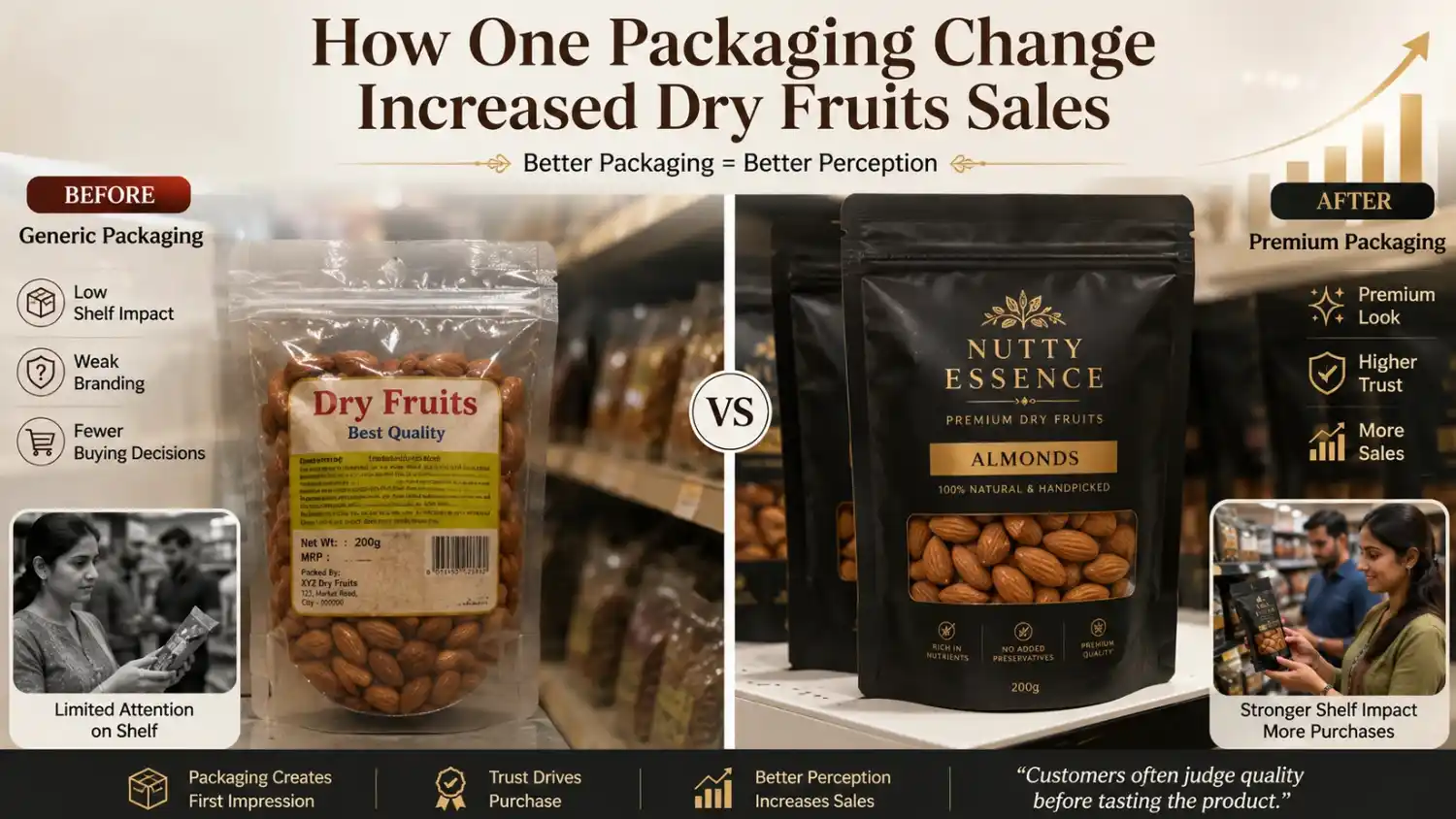
The dry fruits market is crowded, and most brands try to grow sales by lowering prices or spending more on ads. But many times, the real problem is much simpler, the packaging is failing to make buyers stop, trust, and purchase.
That matters more than ever today because packaging directly affects how customers judge freshness, quality, and value within seconds. Studies in consumer behavior consistently show that packaging heavily influences buying decisions, especially in food and healthy snack categories. In fact, market insights from packaging companies like Amcor highlight that younger consumers often decide whether a product feels premium based on packaging design alone.
This is exactly why packaging has become one of the most powerful growth tools for modern dry fruits brands.
As Philip Kotler explains, “Packaging can be the last advertisement a customer sees before making a purchase.” In the dry fruits business, packaging is no longer only about protection. It shapes shelf visibility, builds trust, improves freshness perception, and influences repeat buying behavior.
A simple change to the packaging can really make a difference in how people think about a brand. For example using a design and resealable pouches for almonds, raisins or cashews can make these products seem fresher and healthier. This is because people can see the product better and the packaging looks nicer on the shelf.
This guide talks about how changing the packaging of fruits like almonds and raisins can increase sales. It shows how making the packaging better can help people trust the brand more and make it easier for them to buy the product.
The guide also explains why using premium packaging is important for getting people to buy the product again and again and, for helping the brand grow in the term. It looks at the psychology behind how people choose dry fruits packaging and how the design of the packaging can affect what people buy. By using packaging brands can make their dry fruits seem more premium and increase sales.
The packaging problem that was holding sales back
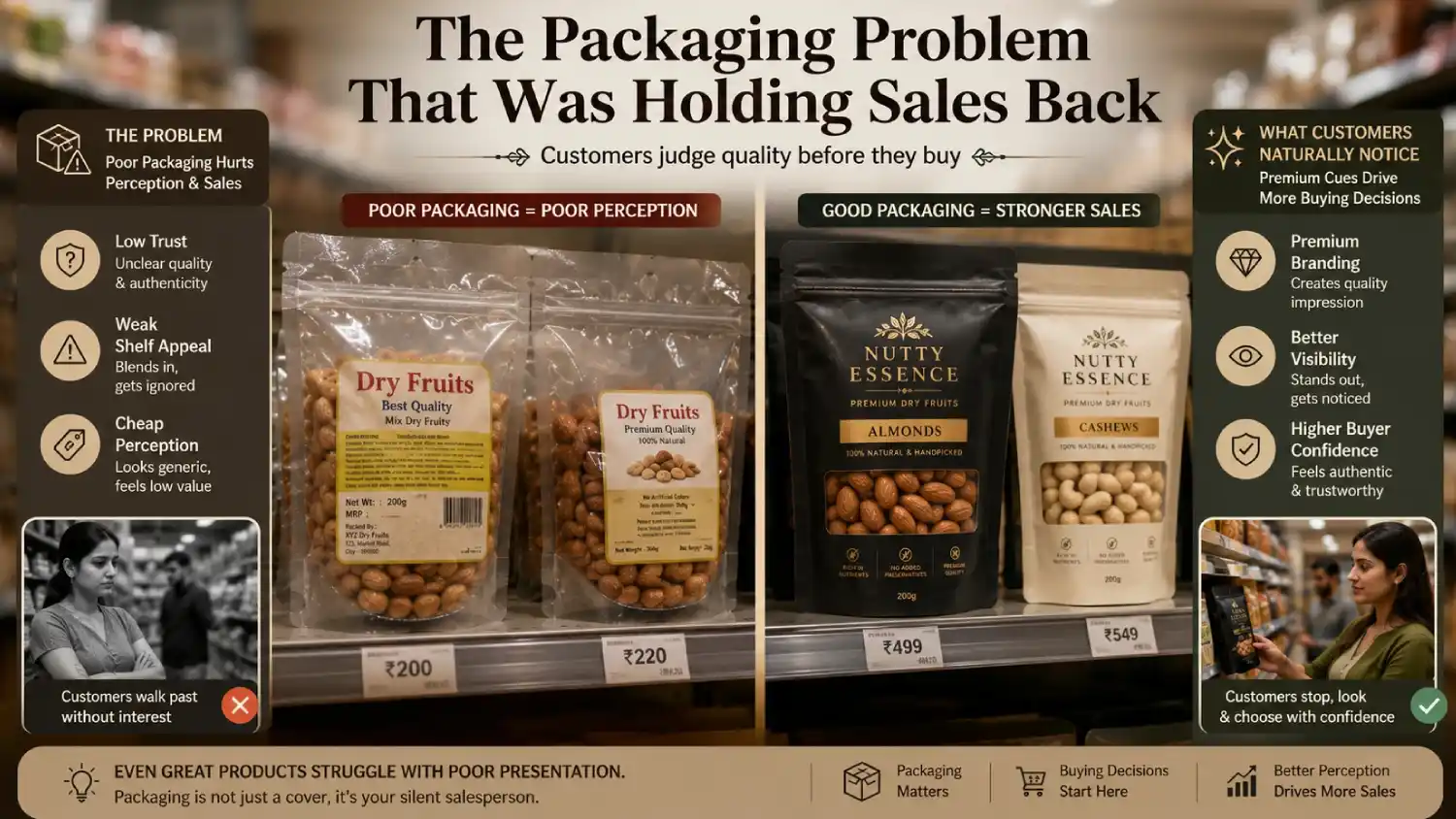
The product was not weak, the packaging was. On a crowded shelf, plain packs blend into the background, and buyers move on in seconds. That is where sales start to slip, before anyone tastes the product.
Shoppers rarely study a shelf line by line, they scan fast and trust what looks clear, fresh, and easy to buy.
Why shoppers ignored the product on the shelf
Crowded shelves punish dull packaging. When a pack has weak color, little contrast, or no clear front panel, it disappears next to sharper-looking brands. Research from Rich Insights Research on package noticeability makes the point clearly, visibility is often the real problem, not product quality.
That matters because most buyers judge quickly. In-store, they use visual shortcuts, then decide if a pack feels premium, safe, or worth picking up. If the package looks ordinary, the brain reads it as ordinary.
Shoppers also bring their own baggage to the shelf. In reviews and social posts, people often complain when dry fruit packs look full but contain a lot of air, or when the product feels hidden inside a large bag. That kind of user-generated feedback spreads trust fast, and bad trust is hard to win back.
A simple shelf test shows the issue:
- Plain packs vanish beside brighter, cleaner designs.
- Busy shelves shorten attention, so small design flaws matter more.
- First impressions shape quality judgments before the bag is even opened.
What customers expect from dry fruits packaging today
Today the packaging of fruit has to do a lot more than just hold the dry fruit. The packaging has to keep the dry fruit fresh be easy to open and then close again. The packaging should also look clean when it is on the shelf. People who buy fruit want the packaging to be practical and straightforward not fancy for no reason. One big thing about fruit packaging is that it can be closed again after it is opened.
Fresh-Lock says that packaging that can be closed again helps keep the fruit fresh after the package is opened. This is important because it is how people really eat fruit at home or when they are out. When a package has a zipper or a seal the person who buys it has control, over how they use it. This small thing can make a difference in whether someone buys the dry fruit again.
A good pack also needs a premium feel. Stand-up pouches and similar formats are popular because they look neat, carry well, and give enough space for clear branding. ePac's dry fruits and nuts packaging guide explains that resealable pouches support freshness, convenience, and a more natural shelf look.
Customers now expect a few basics:
- Freshness they can trust
- A reseal that actually works
- Easy carrying for busy days
- A clean, healthy look
- Packaging that feels worth the price
That is why packaging changed the sales story. Once the pack looked fresher, easier to use, and more premium, the product finally matched what shoppers wanted.
The packaging change that made people notice
A small packaging update can change how a dry fruit brand looks before anyone tastes the product. In this case, the pack did three things better at once, it stood up neatly, showed the product clearly, and closed again after opening. That mix matters because buyers do not want guesswork. They want a pack that looks fresh, feels honest, and fits daily use.
When packaging makes the product easy to see and easy to trust, the shelf stops feeling crowded.
How a better pouch shape improved shelf appeal
Stand-up pouches sit upright, so they face the shopper instead of slumping flat. That simple change gives the brand more front visibility, more space for design, and a cleaner look on shelf. Packaging guides from ePac on dried fruit and nut bags point to the same advantage, the upright format looks more premium and helps the product read faster in store.
A flat, old-style pack often looks basic and easy to miss. A stand-up pouch feels more like a product people choose on purpose, not one they grab by chance. That difference matters in dry fruits, where buyers often connect appearance with freshness and quality.
Retail buyers also like packages that stack well and hold their shape. Better shelf posture makes the product look organized, and organized products usually get more attention.
Why clear windows and product images built trust
Dry fruit buyers want proof. A clear window lets them see almonds, raisins, apricots, or mixed fruit before they buy, and that visual proof cuts doubt fast. It tells the shopper the pack is not hiding low-quality product, off-color fruit, or empty space.
Packaging experts often point out that seeing the product inside helps shoppers judge color, size, and freshness right away. That is why window pouches keep showing up in category guides, including window pouch packaging for nuts. The front image helps too, because it reinforces what the shopper expects to find inside.
UGC makes the point even clearer. In buyer reviews, people often say they trust packs more when they can inspect the contents without opening them. That kind of feedback matters, because one clear window can remove the hesitation that a long label never fixes.
How resealable features made the pack more useful
A zipper changes the pack from a one-time bag into something people can keep using. That is a big deal for dry fruits, since many buyers snack in small portions and want the rest to stay fresh.
Fresh-Lock notes that reclosable packaging helps preserve freshness after opening, and that matches real use at home, in cars, and at work.
Convenience is really important. It also helps reduce waste. When the pack closes properly the product stays cleaner, drier and easier to use. The dry fruits product stays that way because the pack closes properly. Buyers notice this. They often think that a resealable pouch is more valuable than a simple tear-open bag. The dry fruits buyers like the pouch.
Customer feedback supports this change in packaging for fruits.
Reviews on listings often praise zippers for holding a tight seal keeping dry fruits snacks crisp and making the pack easy to reuse. The zippers on the dry fruits packs are really helpful. In words the change in packaging for dry fruits did more than just improve the looks it made the dry fruits product easier to use every day. This is a reason why one change in packaging for dry fruits increased sales of dry fruits and became a real sales story, for dry fruits.
Why the new packaging helped sales grow
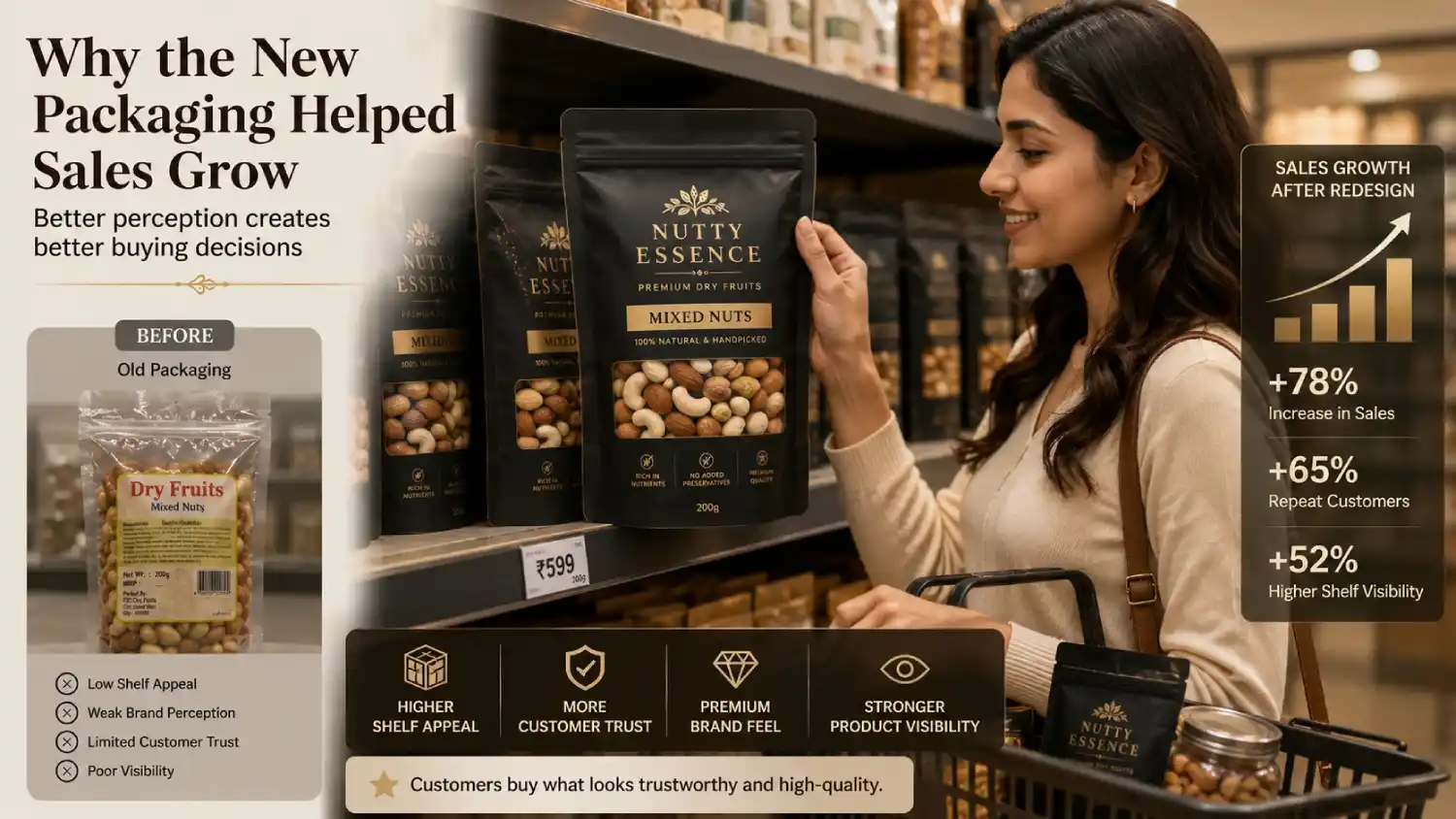
The sales lift did not come from a new recipe or a lower price. It came from packaging that made the product easier to notice, easier to trust, and easier to use again. That matters in dry fruits, where shoppers make quick choices and often buy with their eyes first.
Packaging also works like a silent sales rep. If the pack looks fresh, clear, and practical, people are more likely to pick it up. If it looks dull or hard to read, they move on.
Better design can trigger more impulse buys
Eye-catching packaging helps in the aisle because shoppers scan, they do not study. Bright colors, a clean front panel, and a clear product window can pull attention in seconds. That is often enough to turn a casual glance into a pickup.
This is one reason packaging redesigns can move sales without heavy ad spend. A well-known case study on Solely's packaging redesign showed how clearer shelf messaging and a simpler front helped the brand grow sales fast. The lesson applies to dry fruits too, when the pack says the right thing fast, the shelf works harder.
UGC backs this up in a simple way. In shopper reviews and comment threads, people often say they bought a snack because it "looked fresh" or because they could see the product inside. That kind of feedback matters because it shows how design affects real buying behavior, not just brand opinion.
A stronger pack can drive impulse buys through a few clear signals:
- Clear visibility helps shoppers judge quality fast.
- Clean layout makes the brand easier to read.
- Fresh colors and shape help the product stand out.
- Simple claims reduce confusion and speed up choice.
Fresh-looking packs can increase repeat purchases
A good first sale matters, but repeat sales matter more. When packaging keeps the product fresh and stays easy to use, customers have a better experience at home. That good experience makes them more likely to buy the same brand again.
Resealable packs are a big part of that. They help keep dry fruits fresh after opening, and they make snacking easier over several days. Fresh-Lock explains how reclosable packaging supports consumer loyalty, because people notice convenience right away and connect it with product quality.
That is where packaging can build trust over time. If the zipper works, the product stays cleaner, and the pack still looks good in the pantry, the brand feels reliable. Buyers notice that. In reviews, they often mention freshness, easy storage, and whether the seal holds well.
Repeat buying is usually driven by small wins like these:
- The pack closes easily after opening.
- The fruit stays fresh longer.
- The bag is easy to carry and store.
- The product feels worth the price.
When customers trust the pack, they trust the brand more often the next time they shop.
Simple facts that show packaging affects buying decisions
Packaging changes directly influence buying behavior, and this pattern appears repeatedly across the healthy snacks, dry fruits, and CPG (consumer packaged goods) industries. Many case studies show that brands experience noticeable sales growth after improving packaging design, especially when the new packaging looks cleaner, easier to understand, and more premium.
In several snack category examples, packaging refreshes have produced sales increases of 20% to 30%, particularly when older packaging lacked visibility or shelf appeal.
This happens because packaging affects how buyers judge:
- Freshness
- Product quality
- Health value
- Brand trust
- Convenience
- Premium positioning
Most shoppers do not carefully compare every product on a shelf. Instead, they make fast decisions using visual cues. A product that looks fresher, cleaner, and easier to trust usually gets picked first.
That is why modern dry fruits packaging has become one of the biggest conversion drivers.
Why visual upgrades improve sales and conversion
Visual improvements make products feel more premium before the customer even touches the pack.
Small design upgrades can create a major psychological difference:
- Better color contrast improves visibility
- Clear windows increase transparency
- Simpler front panels reduce confusion
- Minimal layouts feel cleaner and more modern
- Premium materials improve perceived quality
When packaging looks organized and trustworthy, buyers naturally assume the product inside is also higher quality.
This is especially important in dry fruits because shoppers cannot test freshness before purchasing. They rely heavily on visual presentation to judge:
- Almond quality
- Raisin freshness
- Cashew color
- Product cleanliness
- Packaging hygiene
That is why clear windows work so well. They remove doubt instantly.
Instead of relying only on labels or marketing claims, buyers can visually inspect the product themselves. This creates faster trust and reduces hesitation.
Packaging affects impulse buying behavior
Impulse buying plays a major role in snack and dry fruits sales.
A shopper may not enter a store planning to buy almonds or pistachios, but attractive packaging can trigger an unplanned purchase.
Packaging increases impulse buying when it:
- Stands out quickly
- Feels premium
- Looks healthy and fresh
- Communicates value instantly
- Feels convenient for daily use
This is why premium dry fruits brands invest heavily in:
- Shelf-ready packaging
- Strong typography
- Modern color palettes
- Healthy snack positioning
- Clear product visibility
The shelf only gives brands a few seconds to capture attention. Good packaging helps products win those seconds.
Why eco-friendly packaging builds loyalty
Sustainability has also become a major factor in premium food branding.
Modern consumers increasingly connect eco-friendly packaging with:
- Better quality
- Ethical sourcing
- Health-conscious brands
- Responsible business practices
This directly affects customer loyalty.
Many buyers now prefer:
- Recyclable pouches
- Eco-friendly materials
- Minimal plastic use
- Sustainable packaging solutions
When a dry fruits brand combines premium design with sustainability, customers often perceive the brand as more thoughtful and trustworthy.
This emotional connection improves:
- Repeat purchases
- Brand preference
- Long-term customer retention
In crowded categories, sustainable packaging can become a competitive advantage.
Main packaging patterns that repeatedly improve sales
The same packaging trends continue to appear across successful dry fruits and snack brands:
Better shelf visibility increases impulse buys
Products that are easier to notice attract more attention and improve pickup rates.
Clear product presentation builds trust
Visible products and transparent packaging reduce buyer hesitation.
Resealable packs improve repeat buying
Convenient packaging improves daily use and keeps products fresh longer.
Eco-friendly materials strengthen loyalty
Sustainable packaging improves emotional trust and brand image.
Premium layouts increase perceived value
Simple, clean designs make products feel more expensive and higher quality.
Packaging is no longer just protection
Research across snack foods and consumer packaged goods keeps showing the same result:
Packaging is no longer only functional.
It now directly influences:
- Buying decisions
- Conversion rates
- Brand trust
- Repeat purchases
- Premium positioning
- Profit margins
Modern packaging acts like a silent salesperson.
If the design looks clean, premium, and practical, shoppers are more likely to:
- Stop and notice the product
- Pick it up
- Trust the brand
- Purchase faster
- Buy again later
That is why packaging has become one of the strongest growth drivers in the premium dry fruits industry.
What experts say about packaging and dry fruits sales
Packaging experts consistently agree on one major point:
Dry fruits sell better when the packaging protects freshness and makes quality easy to trust.
Freshness, convenience, and perceived value work together. If one of these elements feels weak, sales often slow down.
This is especially true in dry fruits because buyers expect:
- Long shelf life
- Premium appearance
- Hygienic packaging
- Fresh taste
- Easy storage
- Honest presentation
The packaging must support all these expectations at the same time.
Why freshness protection matters so much
Freshness is one of the biggest concerns in the dry fruits market.
If dry fruits lose crunch, absorb moisture, or develop oily texture, buyers immediately associate the brand with poor quality.
That is why modern premium dry fruits brands use:
- Resealable zippers
- High-barrier films
- Airtight seals
- Moisture-resistant packaging
- Freshness-lock technology
Packaging experts emphasize that freshness protection directly affects repeat purchases because customers remember how the product felt after opening.
A product that stays fresh longer improves:
- Customer satisfaction
- Product trust
- Brand reputation
- Repeat buying behavior
Why trust and transparency drive sales
Experts also highlight transparency as a major buying factor.
Modern buyers prefer packaging that clearly communicates:
- Ingredients
- Nutrition facts
- Product origin
- Storage instructions
- Preservative information
- Certifications
When packaging feels honest and informative, customers feel safer purchasing the product.
This is one reason why minimal packaging design often performs better than overly crowded designs.
Simple layouts create:
- Faster readability
- Better trust
- Cleaner brand perception
- Stronger premium positioning
Why perceived value changes buying behavior
Packaging also changes how buyers judge value.
The same almonds can feel:
- Cheap in a dull plastic bag
- Premium in a clean resealable pouch
Even when the product quality is identical.
This is called perceived value.
Premium packaging creates the feeling that:
- The product is fresher
- Quality control is better
- Ingredients are safer
- The brand is more professional
This psychological effect allows premium dry fruits brands to maintain higher pricing and stronger margins.
Expert views on freshness, trust, and perceived value
Freshness is the first test. Dry fruits lose appeal fast when packaging lets in moisture, oxygen, or too much light. That is why resealable pouches, strong seals, and high-barrier films get so much attention in packaging guidance, including ePac's dried fruit and nut packaging guide.
Trust comes next. Buyers want to see clear labels, simple claims, and sometimes a product window. When they can check the fruit inside, the pack feels more honest. That matters in UGC too, because reviews often mention things like "it looked fresh" or "I could see the almonds before opening it."
Perceived value is where packaging turns into pricing power. A clean pouch with a zipper, sharp print, and neat shape feels more premium than a loose or dull bag. In practice, that can make the same product feel gift-worthy instead of basic.
Packaging experts often point to three trust signals:
- Visible freshness, through windows or clear product photos
- Tight seals, which suggest better storage and less waste
- Clear information, such as ingredients, origin, and nutrition facts
When the pack looks fresh and well made, the product feels safer before the first bite.
Expert views on why clean, modern design wins attention
Clean design gets attention because shoppers process shelves fast. Simple layouts, clear type, and honest visuals are easier to read than busy graphics. In a crowded dry fruits aisle, that clarity helps a brand stand out without shouting.
Modern packaging also fits the way people judge healthy snacks today. Light backgrounds, neat labels, and balanced colors often signal purity and care. A strong example is modern dry fruit packaging design guidance, which points to minimal layouts, clear branding, and a premium finish as key drivers of shelf appeal.
Authenticity matters too. Shoppers do not want packaging that feels fake or overdone. They want a pack that looks real, clean, and close to the product inside. That is why premium-looking dry fruits packaging often uses simple shapes, product windows, and restrained color choices.
UGC backs this up in a plain way. Buyers often post that they chose one brand because it "looked cleaner" or "seemed more natural" than the rest. Those comments matter, because they show how design affects buying behavior before anyone tastes the product.
A good modern pack usually does a few things well:
- It keeps the front clear and easy to scan.
- It uses clean colors that fit the product.
- It shows enough product detail to build trust.
- It feels premium without looking overdesigned.
That mix is a big reason how one packaging change increased dry fruits sales. The better pack did more than hold the product. It made shoppers stop, trust, and buy with less hesitation.
Dry Fruits Packaging Statistics Table
| Metric | Data / Insight | Why It Matters |
|---|---|---|
| Packaging impact on buying decisions | Most shoppers judge products visually within seconds | First impressions directly affect dry fruits sales |
| Reported sales lift after packaging redesign | 20%–30% in many snack category case studies | Better packaging improves conversion |
| Consumer preference trend | Buyers increasingly prefer premium healthy snacks | Packaging influences premium perception |
| High-performing packaging format | Stand-up resealable pouches | Improves freshness and convenience |
| Trust-building feature | Clear product windows | Helps buyers inspect almonds, raisins, and cashews before buying |
| Repeat purchase driver | Resealable packaging | Supports freshness and long-term usability |
| Premium packaging trend | Minimal and clean layouts | Improves perceived product quality |
| Sustainability trend | Eco-friendly packaging demand rising globally | Builds loyalty among health-conscious buyers |
| Online buying behavior | Product images strongly affect conversion | Visual presentation impacts trust |
| Customer trust factor | Transparent labeling and sourcing | Increases premium positioning |
About the Author
Lake City Dry Fruits is one of India’s trusted dry fruits and spices companies, with decades of experience in sourcing, processing, packaging, and supplying premium-quality dry fruits across India.
The company works closely with growers, importers, wholesalers, and processors to maintain consistent quality across almonds, cashews, raisins, pistachios, dates, and other products. Lake City Dry Fruits serves retailers, wholesalers, resellers, hospitality businesses, and corporate gifting companies through strong supply systems and quality-focused operations.
Lake City Dry Fruits focuses on:
- Premium product sourcing
- Hygienic processing and packaging
- Strong supplier and distribution network
- Consistent product quality
- Long-term customer trust
This content is based on practical industry experience, market trends, customer buying behavior, packaging psychology, and premium branding strategies observed in the dry fruits industry.
FAQs
1. How does packaging increase dry fruits sales?
Packaging increases dry fruits sales by improving shelf visibility, freshness perception, convenience, and customer trust. Premium dry fruits packaging helps products look healthier, fresher, and more valuable.
2. What is the best packaging for premium dry fruits brands?
The best premium dry fruits packaging usually includes stand-up resealable pouches, minimal design, transparent product windows, moisture-resistant materials, and strong branding.
3. Why is resealable packaging important for dry fruits?
Resealable dry fruits packaging helps maintain freshness, reduce moisture exposure, improve convenience, and increase repeat purchases by making the product easier to store and reuse.
4. How does packaging affect customer trust in dry fruits brands?
Packaging affects trust by showing freshness, product quality, clean sourcing, ingredient transparency, and professional presentation. Buyers often judge dry fruits brands based on packaging before tasting the product.
5. Can packaging improve profit margin in dry fruits business?
Yes, premium packaging can improve dry fruits business profit margin by increasing perceived value, supporting premium pricing, improving repeat purchases, and strengthening brand positioning.
Conclusion
Most dry fruits brands believe sales growth comes only from better products or larger advertising budgets. But in reality, packaging often becomes the first and most powerful selling tool.
Customers usually decide within seconds whether a product feels fresh, healthy, trustworthy, and premium. That decision is heavily influenced by packaging design, product visibility, convenience, and overall presentation.
As Philip Kotler explains, “Packaging can be the last advertisement a customer sees before making a purchase.” In the dry fruits business, that single moment can decide whether a customer buys your product or chooses another brand.
This is exactly why packaging matters so much today.
A strong packaging upgrade does more than improve appearance. It improves:
- Shelf visibility
- Customer trust
- Product freshness perception
- Repeat buying behavior
- Premium brand positioning
When the packaging looks cleaner, easier to use, and more transparent, buyers naturally feel more confident about the product inside.
That confidence directly affects:
- Conversion rates
- Repeat purchases
- Customer loyalty
- Profit margins
In the end, packaging is no longer just protection for the product.
It has become part of the customer experience, the branding strategy, and the sales process itself.
The brands that understand this early are the ones that build stronger trust, higher perceived value, and long-term growth in the premium dry fruits market.
For more information, you can contact us.
Author

LCDF Pvt. Ltd.
Lake City Dry Fruits Pvt. Ltd. has been a pioneer in the dry fruits and spices industry for over 60+ years. From humble beginnings in Udaipur to a pan-India presence, we’ve built a reputation for sourcing the best global produce, ensuring uncompromising quality at every step.